There is nothing quite like the first bite of a true, Authentic Greek Salad on a sun-drenched afternoon. Known in Greece as Horiatiki, this “village salad” is a masterclass in simplicity, relying on the vibrant quality of sun-ripened produce rather than complex techniques. Unlike the Westernized versions you might find in plastic containers, a real Authentic Greek Salad contains no lettuce, no heavy creamy dressings, and—most importantly—no crumbled cheese.
When you look at this dish, you are met with a stunning contrast of colors: the deep, ruby red of chunky raw red tomatoes, the forest green of thick cucumber half-moons, and the translucent violet of thinly sliced raw red onion rings. It is a visual feast that perfectly captures the Mediterranean lifestyle. In this guide, we will walk through every sensory detail to ensure your kitchen smells like a taverna in Mykonos.
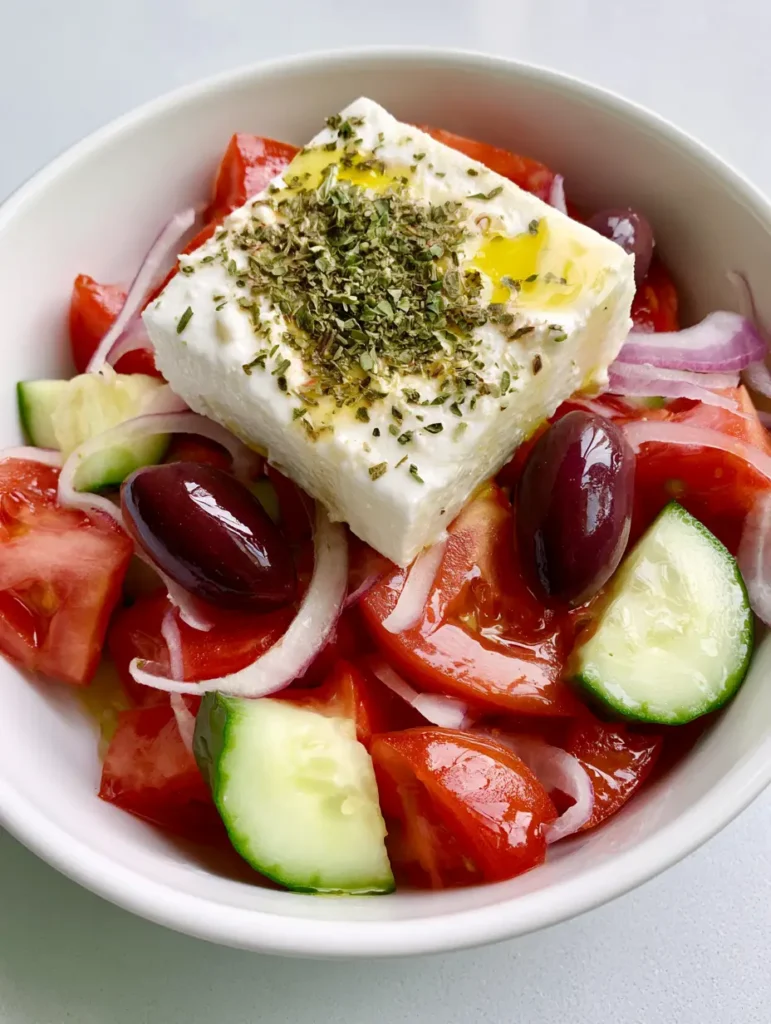
Why This Traditional Horiatiki Recipe Works
- Visual Texture: The combination of large, irregular chunks of vibrant red ripe tomatoes and thick, unpeeled cucumber half-moons creates a rustic, artisan aesthetic that is perfect for Pinterest.
- The Feta Statement: By using a thick rectangular block of feta cheese instead of crumbles, you preserve the creaminess and allow guests to break off exactly how much they want.
- Pantry Staple Dressing: No emulsifiers needed—just a golden extra virgin olive oil drizzle and dried oregano flakes to tie the flavors together.
- Low Effort, High Reward: This recipe requires zero cooking, making it the perfect partner for Greek chicken gyros or a quick summer lunch.
The Anatomy of an Authentic Greek Salad
To achieve the Authentic Greek Salad experience, you must source the best ingredients possible. Since there are so few components, each one must shine. This salad is about the harmony of acidity, salt, and fat.
Vibrant Red Tomatoes: You want 4 large (approx. 600g) tomatoes that are heavy for their size. They should be sliced into chunky raw red tomatoes—irregular wedges that catch the oil and juices in their crevices.
Crisp Cucumbers: Use 1 large (300g) English or Persian cucumber. We keep the skin on for that rustic look and extra crunch, slicing them into thick cucumber half-moons. This provides a structural base for the heavier ingredients.
Red Onion Rings: 1 small red onion (approx. 100g) should be sliced into thinly sliced raw red onion rings. If the onion is too pungent, soak the rings in ice water for 10 minutes to mellow them out before adding them to the bowl.
Kalamata Olives: You need about 1/2 cup (75g) of whole Kalamata olives. Traditionalists never use sliced olives. The pits help the olive retain its firm texture and deep, salty brine flavor.
The Feta Block: This is non-negotiable. One 7oz (200g) thick rectangular block of creamy white feta cheese is placed right on top. Look for sheep’s milk feta stored in brine for the most authentic flavor profile.
Extra Virgin Olive Oil: Use 1/3 cup (80ml) of the highest quality extra virgin olive oil you can find. It should have a peppery finish that complements the dried oregano flakes.
Dried Oregano: 1 teaspoon (approx. 2g) of dried green oregano flakes is the signature scent of Greece. Rub it between your palms as you sprinkle it over the feta to release the oils.
Red Wine Vinegar & Salt: 1-2 tablespoons (15-30ml) of red wine vinegar provides the necessary tang, while a pinch of flaky sea salt draws the juices out of the tomatoes to create a natural “sauce” at the bottom of the bowl.
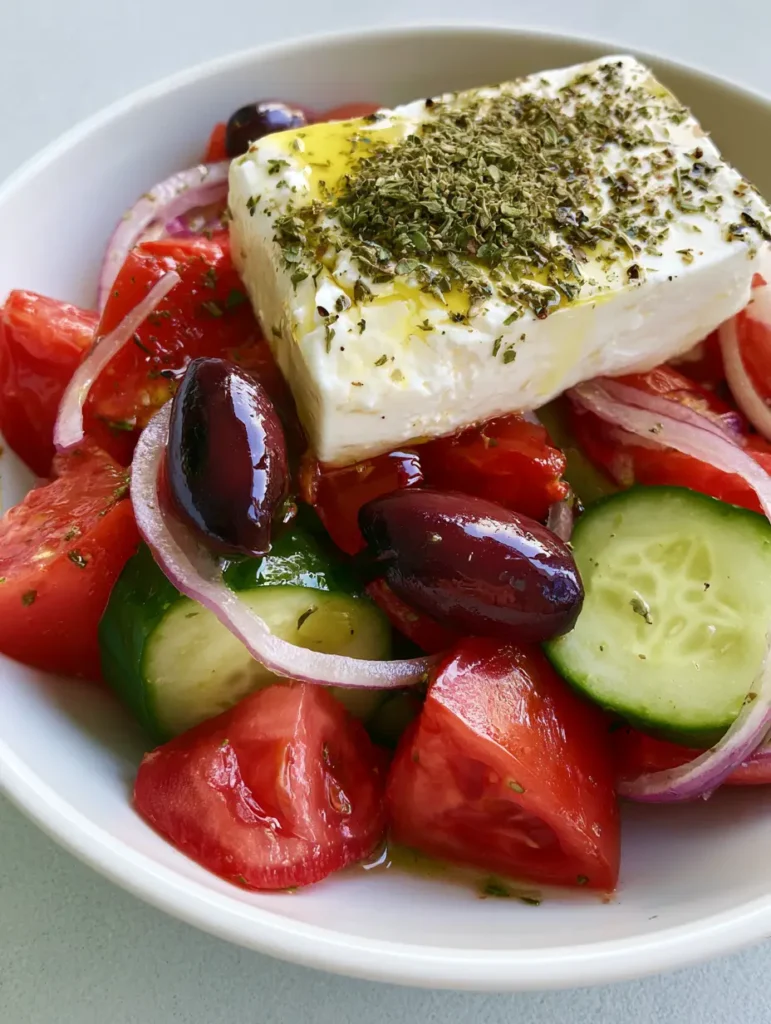
How to Assemble the Perfect Greek Village Salad
Step 1: Prep the Base Vegetables
Start with your chunky raw red tomatoes. Cut them into irregular wedges, ensuring they are large enough to hold their shape. Place them into a shallow white ceramic bowl. The juices that escape during cutting are “liquid gold”—make sure they all go into the bowl.
Next, take your thick, unpeeled cucumber half-moons and scatter them over the tomatoes. The contrast between the soft tomato flesh and the snap of the cucumber skin is a hallmark of an Authentic Greek Salad.
Step 2: Add the Pungent Aromatics
Layer on the thinly sliced raw red onion rings. Scatter them loosely so they don’t clump together. This ensures every bite has a hit of sharpness to cut through the richness of the cheese. At this stage, you can also toss in a handful of glossy, whole dark purple Kalamata olives, nestling them between the vegetables.
Step 3: The Traditional Dressing Method
Do not whisk a dressing in a separate bowl! Instead, drizzle the extra virgin olive oil and red wine vinegar directly over the vegetables. Add a pinch of sea salt. Use your hands or large spoons to gently toss the vegetables until they are lightly coated in a glistening oil dressing, reflecting the light beautifully.
Step 4: The Crowning Glory
Gently place the thick, rectangular block of creamy white feta cheese on the very top of the salad mound. This is the visual centerpiece. Give the feta its own golden extra virgin olive oil drizzle and a generous dusting of dried green oregano flakes.
Expert Tips for a Pinterest-Worthy Salad
- Room Temperature is Key: Never serve an Authentic Greek Salad ice cold. Let the tomatoes and feta sit at room temperature for 30 minutes before serving to unlock their full aromatic potential.
- The “Papara” Factor: “Papara” is the Greek tradition of dipping crusty bread into the leftover oil and tomato juices at the bottom of the bowl. Ensure you have plenty of bread on hand!
- Don’t Overmix: Once the feta is on top, do not stir. The salad is meant to be deconstructed by the diner at the table.
- Quality Vinegar: If you find the salad too sharp, try Asian sesame salad dressing for a different fusion meal another night, but for this recipe, stick to a high-quality aged red wine vinegar.
Storage and Make-Ahead Instructions
The Authentic Greek Salad is best enjoyed immediately. However, if you have leftovers, they can be stored in an airtight container in the refrigerator for up to 24 hours. Note that the salt will continue to draw moisture out of the tomatoes, making the salad more “soupy”—which is actually delicious when soaked up with bread.
Do not freeze this salad. The cellular structure of the cucumbers and tomatoes will collapse, resulting in a mushy mess. This is a dish celebrated for its fresh, raw vitality.
What to Serve with Authentic Greek Salad
This salad is incredibly versatile. It serves as a light lunch on its own, or as the perfect side dish for heavier Mediterranean mains. We love pairing it with parmesan crusted chicken for a high-protein dinner or alongside Italian grinder tortellini salad at a summer potluck.
For a full Greek feast, serve it with grilled lamb chops, warm pita bread, and a side of tzatziki. If you’re looking for something sweet to follow, these Greek honey pistachio cheesecake bars are the perfect thematic conclusion.
Frequently Asked Questions
While it’s best fresh, you can prep the vegetables a few hours early. However, do not add the salt, vinegar, or oil until right before serving to prevent the vegetables from becoming soggy.
No, a traditional Greek Horiatiki salad never contains lettuce. It is strictly composed of tomatoes, cucumbers, onions, olives, and feta cheese.
In an authentic Horiatiki, cucumbers are typically left unpeeled to provide extra texture, crunch, and a rustic aesthetic.
Whole Kalamata olives with the pits still inside are the gold standard. They have a superior texture and richer flavor than pre-sliced olives.
Serving feta as a block is the traditional Greek way. It preserves the moisture of the cheese and allows diners to break off large, creamy pieces themselves.
The Authentic Greek Salad (Horiatiki) Recipe Card
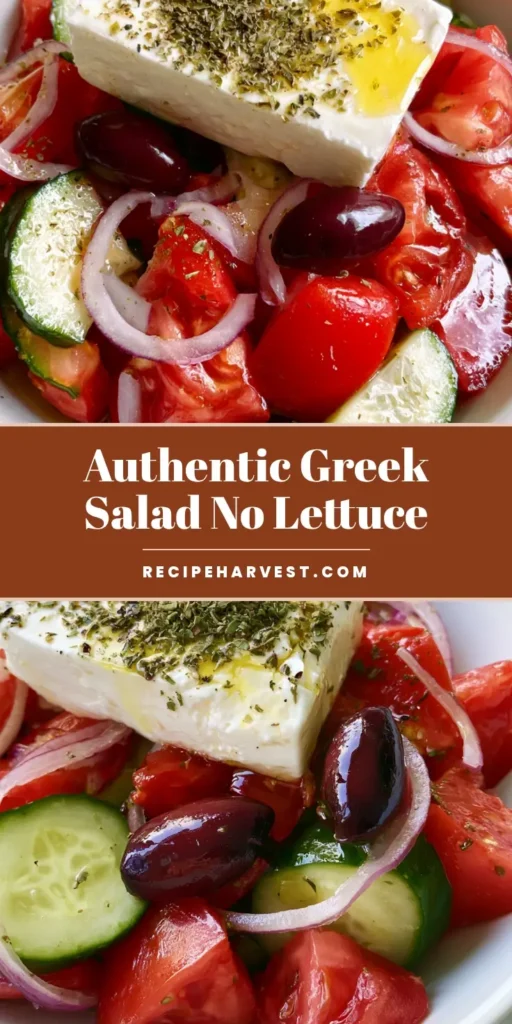
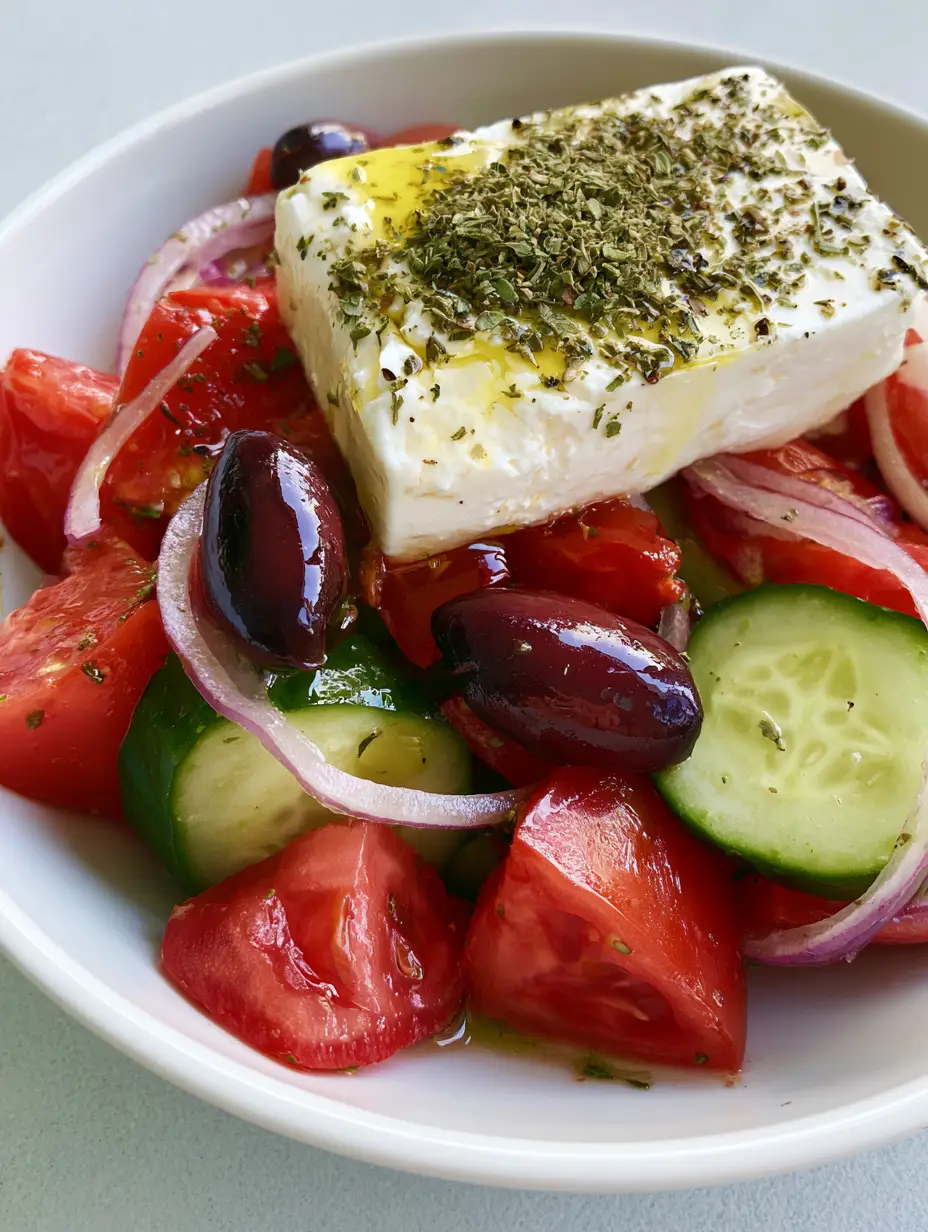
Authentic Greek Salad: The Ultimate Traditional Horiatiki Recipe
Ingredients
Equipment
Method
- Cut the tomatoes into large, irregular chunks and place them into a shallow bowl, ensuring all juices are included.
- Slice the unpeeled cucumber into thick half-moons and add to the bowl with the tomatoes.
- Scatter the thinly sliced red onion rings and the whole Kalamata olives over the base vegetables.
- Pour the extra virgin olive oil and red wine vinegar over the vegetables. Add a pinch of sea salt and toss gently to coat.
- Place the thick block of feta cheese on top of the salad mound. Drizzle with more olive oil and sprinkle generously with dried oregano.
Notes
Always use a block of feta rather than crumbles to stay authentic to the Horiatiki style.
Save This Recipe to Pinterest!
If you love this Authentic Greek Salad, please save it to your “Healthy Recipes” or “Summer Salads” board on Pinterest! Following RecipeHarvest helps us keep the kitchen running. If you make this at home, snap a photo and share it in the comments below—we love seeing your chunky raw red tomatoes and creamy white feta masterpieces. Don’t forget to leave a 5-star rating if this brought a taste of Greece to your home!