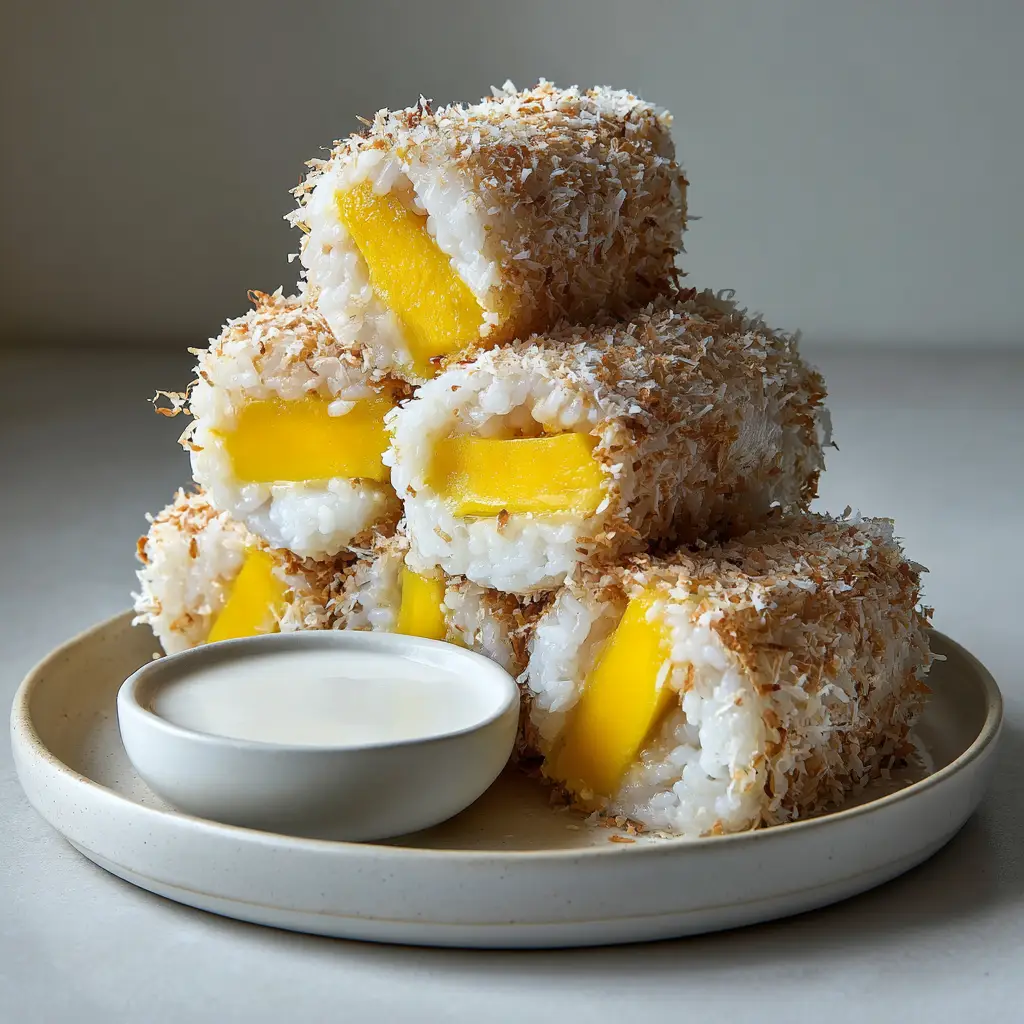
Mango Sticky Rice Rolls are the ultimate handheld evolution of Thailand’s most beloved street food dessert. Imagine vibrant, honey-sweet mango batons tucked inside a thick, pearlescent layer of coconut-infused glutinous rice. These aren’t just snacks; they are a textural masterpiece that redefines the classic pairing of fruit and grain.
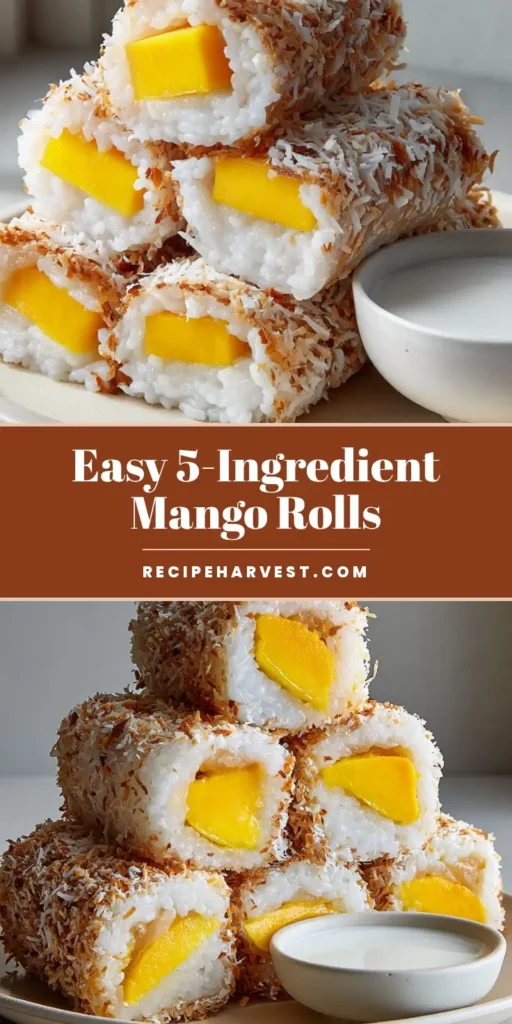
In this recipe, we transform the traditional bowl-and-spoon experience into a sophisticated, bite-sized roll. Every cylinder is heavily coated in coarse, golden-brown toasted coconut flakes for a crunch that perfectly contrasts the soft, chewy rice. Whether you’re hosting a dinner party or craving a tropical treat, these rolls deliver restaurant-quality results right in your kitchen.
Taking inspiration from the delicate art of mango mochi, this dish balances sweetness with a hint of salt. The visual appeal is undeniable, featuring glistening white rice and golden flakes stacked elegantly on a minimalist plate. This handheld format makes them the perfect companion to a spread of healthy summer crockpot recipes.
Why You Will Love This Modern Thai Twist
- Handheld Convenience: No spoons required for these portable, sushi-style dessert cylinders.
- Explosive Textures: You get a satisfying crunch from the toasted coconut followed by the dense, “pearlescent” chew of steamed rice.
- Visual Showstopper: The contrast between the vibrant yellow mango and the golden-brown exterior makes these a Pinterest-worthy centerpiece.
- Controlled Sweetness: By making the thick coconut milk sauce a dipping component, you can control the level of indulgence in every bite.
The Anatomy of a Perfect Mango Roll: Essential Ingredients
Long-Grain Thai Glutinous Rice: 2 cups (400g). Also known as “sweet rice,” this variety becomes glistening and translucent when steamed, providing the essential structural integrity for rolling.
Ripe Honey Mangoes: 2 large (approx. 600g). You need firm but sweet mangoes that hold their shape when sliced into long, vibrant yellow batons.
Full-Fat Coconut Milk: 1.5 cups (360ml). This is split between the rice seasoning and the thick, opaque dipping sauce for a rich, tropical flavor profile.
Unsweetened Shredded Coconut: 1 cup (80g). These are toasted until golden-brown to create the signature coarse outer coating described in our visual blueprint.
Granulated Sugar: 1/2 cup (100g). This dissolves into the coconut milk to glaze the rice grains, giving them a glistening, “pearlescent” finish.
Cornstarch: 1 tsp (3g). A small amount of cornstarch is the “invisible” secret to transforming thin coconut milk into a thick, dipping-consistency sauce.
Fine Sea Salt: 1/2 tsp (3g). Salt is scientifically necessary to brighten the coconut flavor and prevent the dessert from being one-dimensionally sweet.
Tools Required for Professional Results
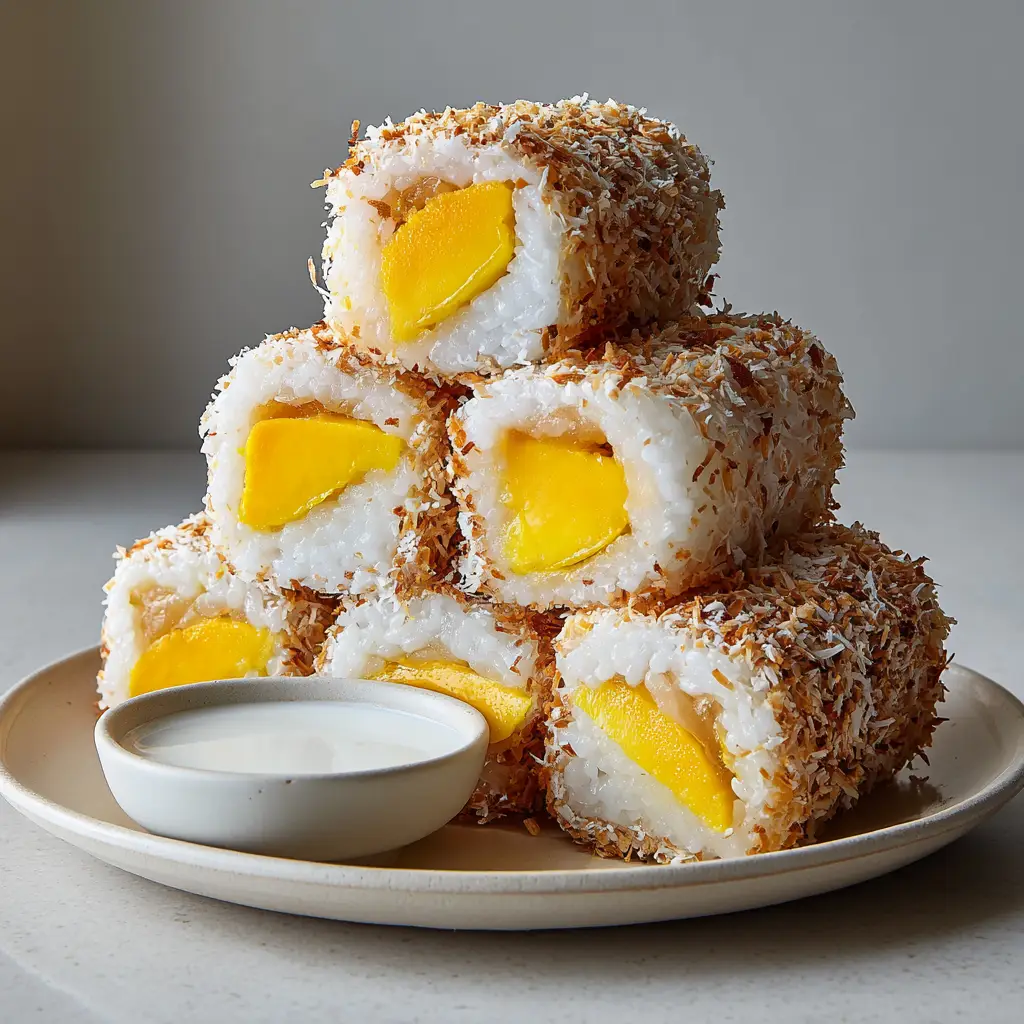
To achieve the “cylindrical” and “neatly stacked” look seen in our smartphone-style photo, you will need a few key tools. A traditional Thai bamboo steamer or a stainless steel steamer basket is non-negotiable for the rice texture. Boiling glutinous rice like long-grain white rice will result in a mushy mess that cannot be rolled.
You will also need a fine-mesh sieve for rinsing the rice until the water runs clear, which removes excess starch. A sharp chef’s knife is required to get those clean, straight mango batons that form the core of your rolls. Finally, use a bamboo sushi mat lined with plastic wrap to get the rice rolls tight and uniform.
Mastering the Steamed Coconut Rice Base
Soaking for Structural Integrity
Begin by rinsing your glutinous rice at least 3-4 times in cold water. You must soak the rice for a minimum of 4 hours, or ideally overnight, to ensure the grains hydrate evenly for that “dense, glistening” texture.
If you skip the soak, the center of the grains will remain hard, ruining the creamy mouthfeel. Drain the soaked rice and spread it evenly in your steamer basket lined with cheesecloth or a silicone mat.
The Steaming Process
Steam the rice over boiling water for 20-25 minutes. Halfway through, use a wooden spoon to gently flip the rice to ensure even cooking across all layers.
The rice is done when the grains are translucent and sticky to the touch. It should look like pearlescent white pearls, smelling faintly of toasted grain and sweet grass.
Creating the Thick Coconut Glaze and Dipping Sauce
While the rice steams, combine 1 cup (240ml) of coconut milk, 1/3 cup (65g) of sugar, and 1/4 tsp of salt in a small saucepan. Heat over medium until the sugar dissolves, but do not let it boil vigorously.
In a separate small bowl, whisk the remaining 1/2 cup (120ml) of coconut milk with the cornstarch and a pinch of salt. Add this to the saucepan and simmer until the liquid coats the back of a spoon—this creates the “thick, opaque white sauce” for dipping.
Pour about half of the warm, un-thickened coconut mixture over the freshly steamed rice in a bowl. Fold gently and let it sit for 15 minutes to allow the rice to absorb the liquid and become glistening.
Toasting the Golden-Brown Coconut Coating
Place your unsweetened shredded coconut in a dry skillet over medium-low heat. Stir constantly for 3-5 minutes, watching closely as the oils release and the color shifts.
You are looking for a deep, “golden-brown” hue as described in the Midjourney prompt. Remove immediately from the heat and spread on a flat plate to stop the cooking process; the residual heat can easily burn the delicate flakes.
Assembling Your Handheld Mango Sticky Rice Rolls
Slicing the Mango Core
Peel the mangoes and slice the flesh away from the pit in large “cheeks.” Cut these cheeks into uniform batons, roughly 3 inches long and 1/2 inch thick.
Uniformity is key here. Having consistent mango cores ensures your rolls stack neatly on the white ceramic plate without wobbling or falling apart.
The Sushi-Style Rolling Technique
Place a sheet of plastic wrap over your sushi mat. Spread a thin, even layer of the seasoned coconut rice into a rectangle (about 4×6 inches).
Place a mango baton in the center. Use the mat to lift the rice over the mango, pressing firmly to create a tight “cylindrical roll.” The rice should completely encase the mango core.
The Final Golden Coating
Remove the plastic wrap and immediately roll the sticky cylinder in the plate of toasted coconut flakes. Apply gentle pressure so the “entire outer surface is heavily coated.”
Slice the long roll into two or three smaller pieces using a damp, sharp knife. The dampness prevents the sticky rice from tearing, ensuring a clean visual of the vibrant yellow mango center.
Pro Tips for Culinary Success
- Temperature Control: Always mix the coconut glaze into the rice while the rice is still hot; this ensures maximum absorption.
- The Damp Knife Trick: Keep a bowl of warm water nearby when slicing the rolls to keep your knife clean and the cuts sharp.
- Mango Selection: Use Ataulfo (Honey) mangoes if possible; they have less fiber and a more buttery texture than Tommy Atkins varieties.
- Sauce Consistency: If your dipping sauce is too thick, whisk in a tablespoon of warm water or more coconut milk to reach the desired flow.
Shelf Life and Storage Advice
Mango Sticky Rice Rolls are best enjoyed within 2-3 hours of assembly while the rice is at its peak chewiness. Do not refrigerate these rolls if possible, as cold temperatures cause glutinous rice to turn hard and opaque.
If you must store them, keep them in an airtight container at room temperature for up to 6 hours. For the dipping sauce, you can keep it in the fridge for 3 days, but you will need to reheat it gently to restore its “thick, opaque” consistency.
Tropical Pairings and Serving Suggestions
These rolls are a fantastic finale to a Thai-inspired meal featuring coconut pineapple rice. The flavor profile also pairs beautifully with other fruit-forward desserts like peach bellini cupcakes.
If you are looking for a savory contrast, serve these after a light lunch of authentic greek salad. The acidity of the salad cleanses the palate for the rich, coconut-heavy dessert to follow.
Common Questions About Thai Mango Sticky Rice
They are best served fresh. If refrigerated, the rice will harden. Keep them at room temperature for up to 6 hours for the best texture.
No, Jasmine rice lacks the high starch content needed to create the ‘sticky’ and ‘pearlescent’ texture required to hold the roll’s shape.
A small cornstarch slurry added to the coconut milk while simmering ensures it reaches a thick, dipping-sauce consistency.
Keep your hands and the sushi mat lightly dampened with water or a touch of coconut oil to manage the sticky rice easily.
This usually happens if the rice wasn’t soaked long enough (minimum 4 hours) or if it was boiled rather than steamed.
The Ultimate Mango Sticky Rice Rolls Recipe
Mango Sticky Rice Rolls with Toasted Golden Coconut
Ingredients
Equipment
Method
- Steam the pre-soaked glutinous rice for 20-25 minutes until translucent and pearlescent white.
- Fold the warm coconut milk, sugar, and salt mixture into the steamed rice; let sit for 15 minutes to absorb.
- Spread rice on a plastic-lined mat, place mango baton in the center, and roll into a tight cylinder.
- Roll the cylinders in toasted golden-brown coconut flakes until heavily and evenly coated.
Notes
Keep your hands and knife slightly damp to prevent the rice from sticking while rolling and slicing.
Bring the Taste of Thailand Home
These Mango Sticky Rice Rolls offer a sophisticated way to enjoy a classic flavor combination. The contrast of the pearlescent rice, the vibrant fruit, and the golden toasted coconut creates a sensory experience that is as beautiful as it is delicious. We invite you to share your results and tag us on social media!
Don’t forget to follow our Pinterest for more visually stunning recipes. If you loved this handheld treat, leave a comment below and tell us which tropical fruit we should roll next!