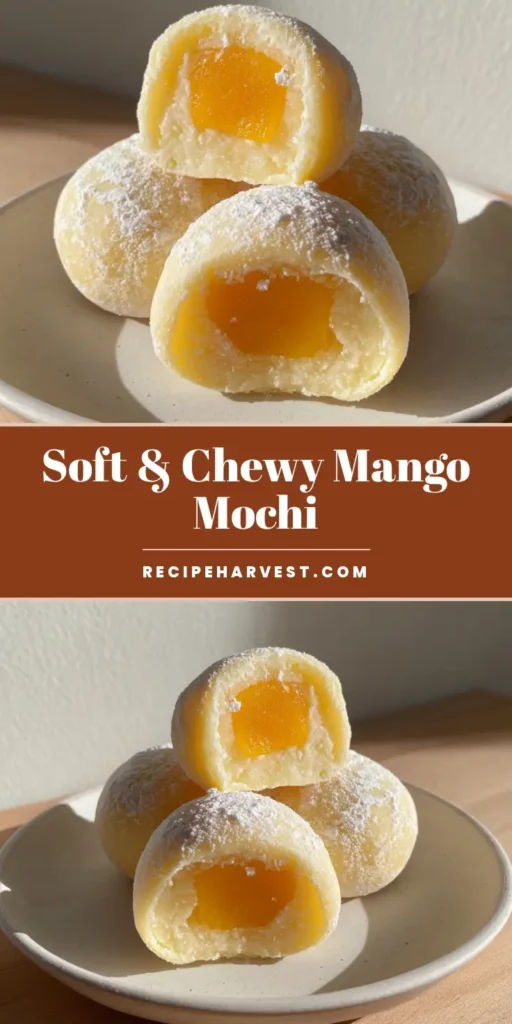
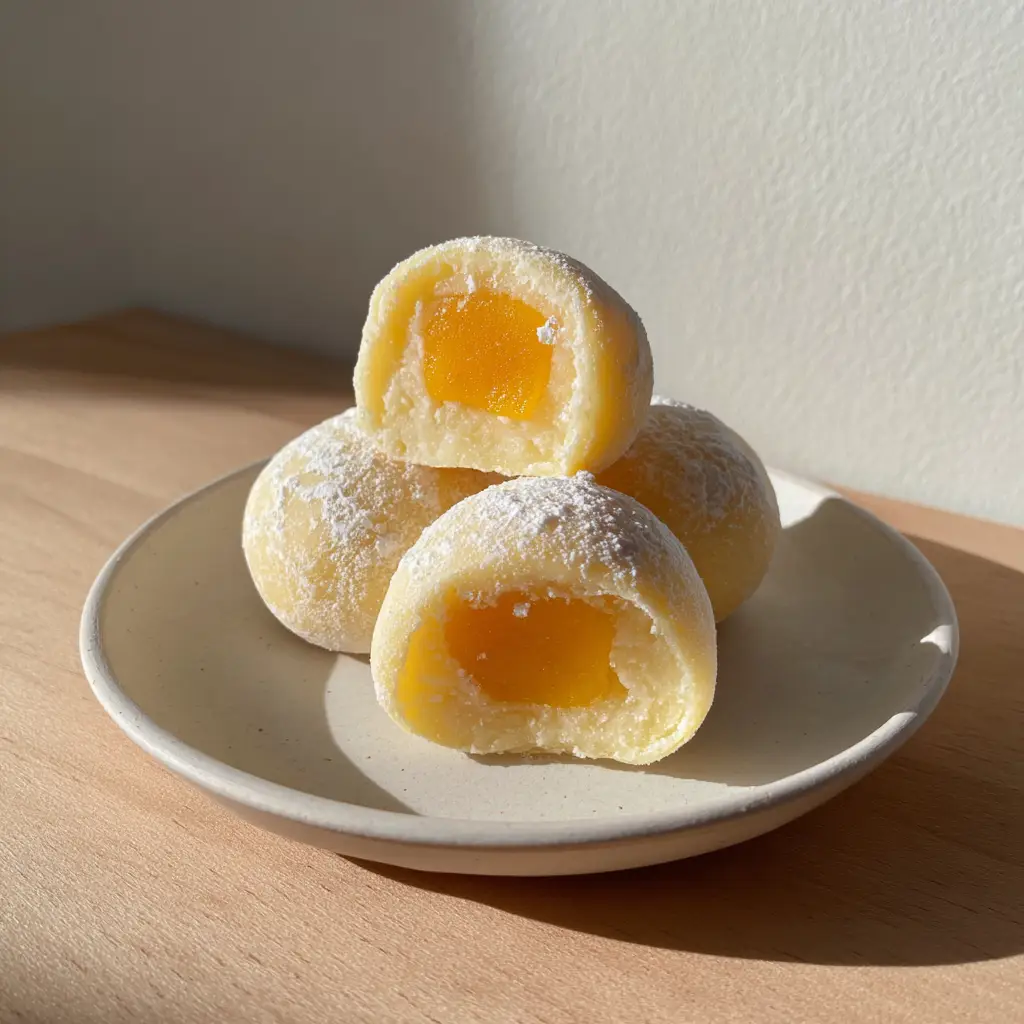
Mango Mochi is the vibrant, pillowy-soft treat that has taken the internet by storm, and for good reason. Imagine a translucent, elastic glutinous rice dough, delicately tinted a pale pastel yellow, wrapped around a massive, sun-ripened cube of juicy mango. This recipe captures the essence of tropical indulgence with a texture that is simultaneously chewy, bouncy, and melt-in-your-mouth tender. Whether you are a seasoned wagashi enthusiast or a curious home cook, this homemade version delivers a professional-grade result right from your steamer basket.
Why This Mango Mochi Recipe Is a Pinterest Sensation
- The Perfect Texture: We use a precise ratio of glutinous rice flour to water to achieve that signature “QQ” elasticity that Mango Mochi lovers crave.
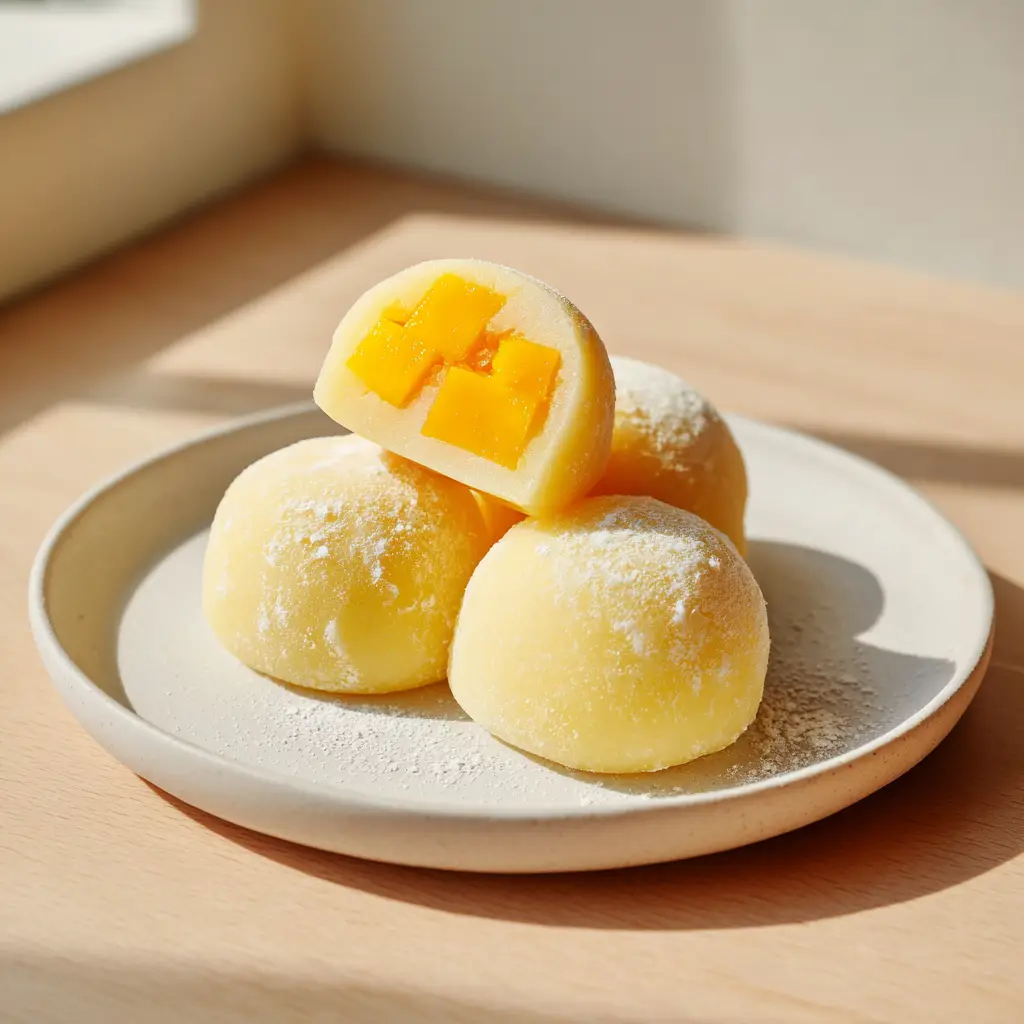
- Vibrant Visual Contrast: The pale yellow dough perfectly complements the deep, vibrant orange of the fresh mango center.
- Naturally Gluten-Free: A crowd-pleasing dessert that caters to various dietary needs without sacrificing flavor.
- Minimalist Elegance: Simple, clean lines make these mochi balls look like they came from a high-end Tokyo boutique.
If you love working with tropical flavors and chewy textures, you might also enjoy our mango sticky rice rolls or these coconut pineapple rice bowls for a full island-inspired menu.
Essential Ingredients for the Perfect Mango Mochi
Creating the perfect Mango Mochi requires specific ingredients to ensure the dough remains soft even after cooling. Here is what you will need:
1. Glutinous Rice Flour (Mochiko)
You must use 1 cup (130g) of glutinous rice flour. Regular rice flour will not work as it lacks the high amylopectin content required for that stretchy, gummy texture. This is the structural foundation of your Mango Mochi.
2. Granulated Sugar
We use 1/4 cup (50g) of sugar. Not only does this sweeten the dough, but sugar is also a humectant. It helps keep the mochi soft and prevents it from becoming tough and dry too quickly.
3. Liquid Base & Coloring
You will need 3/4 cup (180ml) of water or coconut milk for a richer flavor. To achieve the aesthetic in our Mango Mochi photos, add 1-2 drops of pale yellow food coloring. This gives the dough a soft, sun-kissed glow.
4. Fresh Ripe Mangoes
Choose 2 large, ripe mangoes (such as Ataulfo or Honey mangoes). You want fruit that is firm enough to hold its shape but ripe enough to be incredibly sweet and juicy. Cut these into 1-inch (2.5cm) cubes.
5. Fine Cornstarch or Katakuriko
1/2 cup (60g) of fine cornstarch is essential for dusting. Mochi dough is incredibly sticky, and this coating allows you to handle and shape the balls without them adhering to your hands or the plate.
Searching for more fruit-forward treats? Check out our peach cobbler cheesecake donuts or these raspberry chocolate lava cupcakes.
Step-by-Step Instructions: Mastering the Steam Method
Step 1: Preparing the Glutinous Dough
In a medium heat-proof glass bowl, whisk together 1 cup (130g) of glutinous rice flour and 1/4 cup (50g) of sugar. Slowly pour in 3/4 cup (180ml) of your liquid while whisking constantly. Add your pale yellow food coloring now. The mixture should be smooth, thin, and free of any lumps. Visual Cue: The batter should look like pale yellow heavy cream.
Step 2: The Steaming Process
Cover the bowl tightly with plastic wrap or a lid. Place it in a steamer over boiling water. Steam on medium-high heat for 15-20 minutes. Sensory Cue: When finished, the dough will transform from an opaque liquid to a translucent, matte, and very sticky solid. If you poke it with a wet spatula, it should feel incredibly elastic.
Step 3: Kneading and Cooling
Carefully remove the hot bowl. While the dough is still hot, use a wet spatula to scrape it onto a surface heavily dusted with cornstarch. Expert Tip: Dust your hands with cornstarch too! Fold the dough over itself a few times to even out the texture. Let it cool until it is comfortable to handle but still warm.
Step 4: Filling the Mango Mochi
Divide the dough into 8-10 equal portions. Flatten a portion into a disk about 3 inches (7.5cm) wide. Place one large, vibrant orange mango cube in the center. Pinch the edges of the dough upward, stretching it gently over the fruit. Visual Cue: The dough should be thick enough to be elastic but thin enough to show a hint of the mango’s glow beneath the surface.
Step 5: The Final Dusting and Plating
Roll the sealed Mango Mochi ball between your palms to ensure it is perfectly round. Give it a final, light coating of fine cornstarch to remove any lingering stickiness. Place the finished pieces on a minimalist white ceramic plate. For the best presentation, slice one mochi in half with a sharp, wet knife to reveal the juicy fruit interior.
If you’re hosting a summer gathering, these pair beautifully with a light authentic Greek salad or some grilled chicken bites.
Expert Tips for Success
- Keep it Wet: To prevent the dough from sticking to your tools, keep a small bowl of water nearby to dip your spatula or knife into.
- Sift Your Flour: For the smoothest Mango Mochi skin, sift your glutinous rice flour before mixing to avoid tiny flour pockets.
- Avoid Over-Steaming: If you steam the dough for too long, it can become overly soft and lose its ability to hold a round shape.
- Handle While Warm: The dough is much more pliable and easier to seal when it is still warm. Once it cools completely, it becomes harder to pinch the seams shut.
Storage and Freshness Guide
Mango Mochi is best enjoyed the day it is made. Because the fresh mango has a high water content, it will eventually begin to soften the dough.
Room Temperature: Store in an airtight container for up to 24 hours. Do not refrigerate if possible, as the cold temperature will cause the glutinous rice dough to turn hard and lose its chewiness.
Freezing: You can freeze mochi, but the fresh fruit center may change texture upon thawing. It is best to eat these fresh!
What to Serve With Mango Mochi
These tropical treats are the perfect finish to a savory meal. We recommend serving them alongside:
Frequently Asked Questions
No, regular rice flour will result in a cake-like texture. You must use glutinous rice flour (also known as sweet rice flour or Mochiko) to achieve the signature chewy and elastic mochi texture.
Simply add 1 or 2 drops of yellow food coloring to the liquid batter before steaming. This ensures the color is evenly distributed throughout the dough for a beautiful, professional look.
Mango Mochi is best eaten on the day it’s made. The moisture from the fresh mango will eventually soften the dough. At most, it can be kept in an airtight container at room temperature for 24 hours.
It is not recommended to refrigerate mochi as the cold air makes the glutinous rice dough hard and brittle. For the best chewy texture, keep it at room temperature.
Mochi dough is naturally very sticky due to the high starch content. To handle it, ensure you use plenty of cornstarch on your hands and work surface, and use wet tools when possible.
The Complete Homemade Mango Mochi Recipe
Mango Mochi: The Ultimate Soft and Chewy Tropical Dessert Recipe
Ingredients
Equipment
Method
- Whisk glutinous rice flour, sugar, liquid, and food coloring in a bowl until smooth.
- Cover and steam the bowl for 20 minutes until the dough is translucent and elastic.
- Transfer dough to a cornstarch-dusted surface. Divide into 10 pieces, flatten, and wrap around fresh mango cubes.
Notes
Do not refrigerate, as the dough will harden.
Join the RecipeHarvest Community!
We hope you love this Mango Mochi as much as we do! It is truly the perfect summer dessert. If you make this recipe, please save it to your Pinterest boards so you can find it later! We would love to see your creations—upload a photo in the comments below and don’t forget to leave us a 5-star rating. For more chewy, delicious recipes, follow RecipeHarvest on social media!