Bibim Guksu is the refreshing, vibrant, and soul-satisfying meal your summer rotation has been missing. This classic Korean cold noodle dish combines thin, chewy somyeon wheat noodles with a glossy red gochujang sauce coating that strikes the perfect balance between spicy, sweet, and tangy. Whether you are looking for a quick lunch or a light dinner, this bowl delivers an explosion of flavor in under 15 minutes.
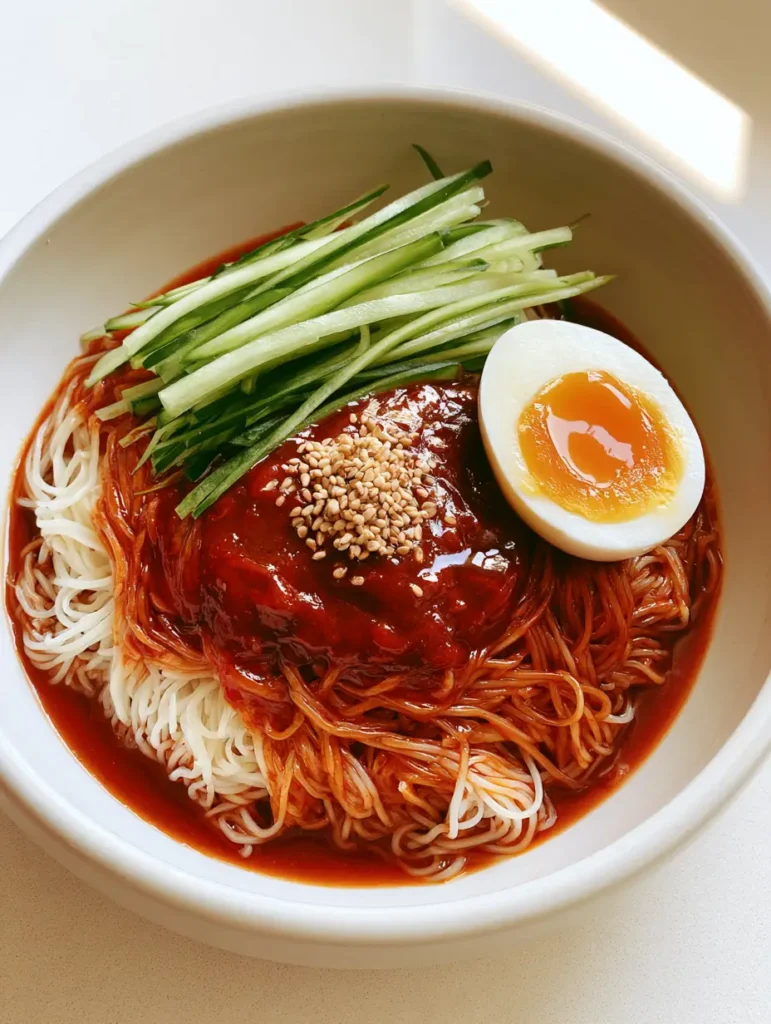
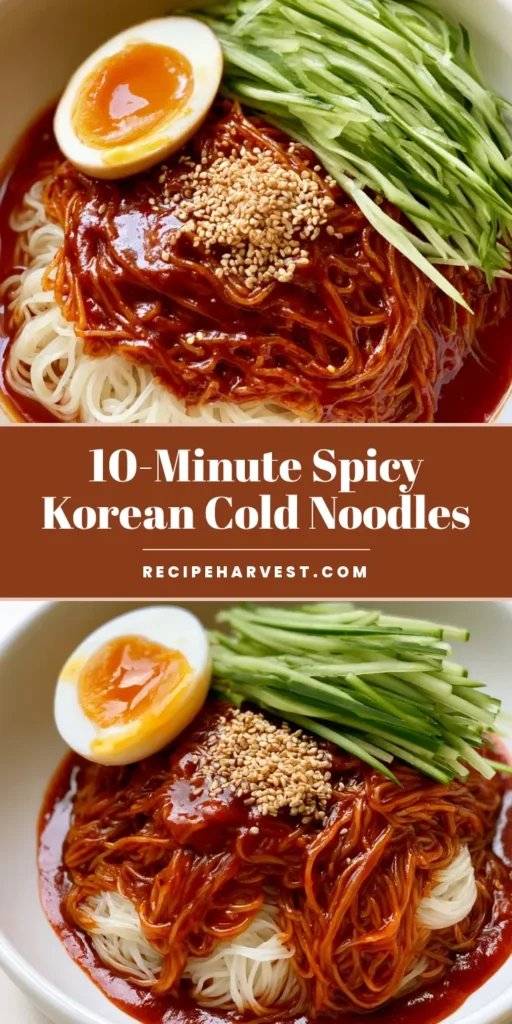
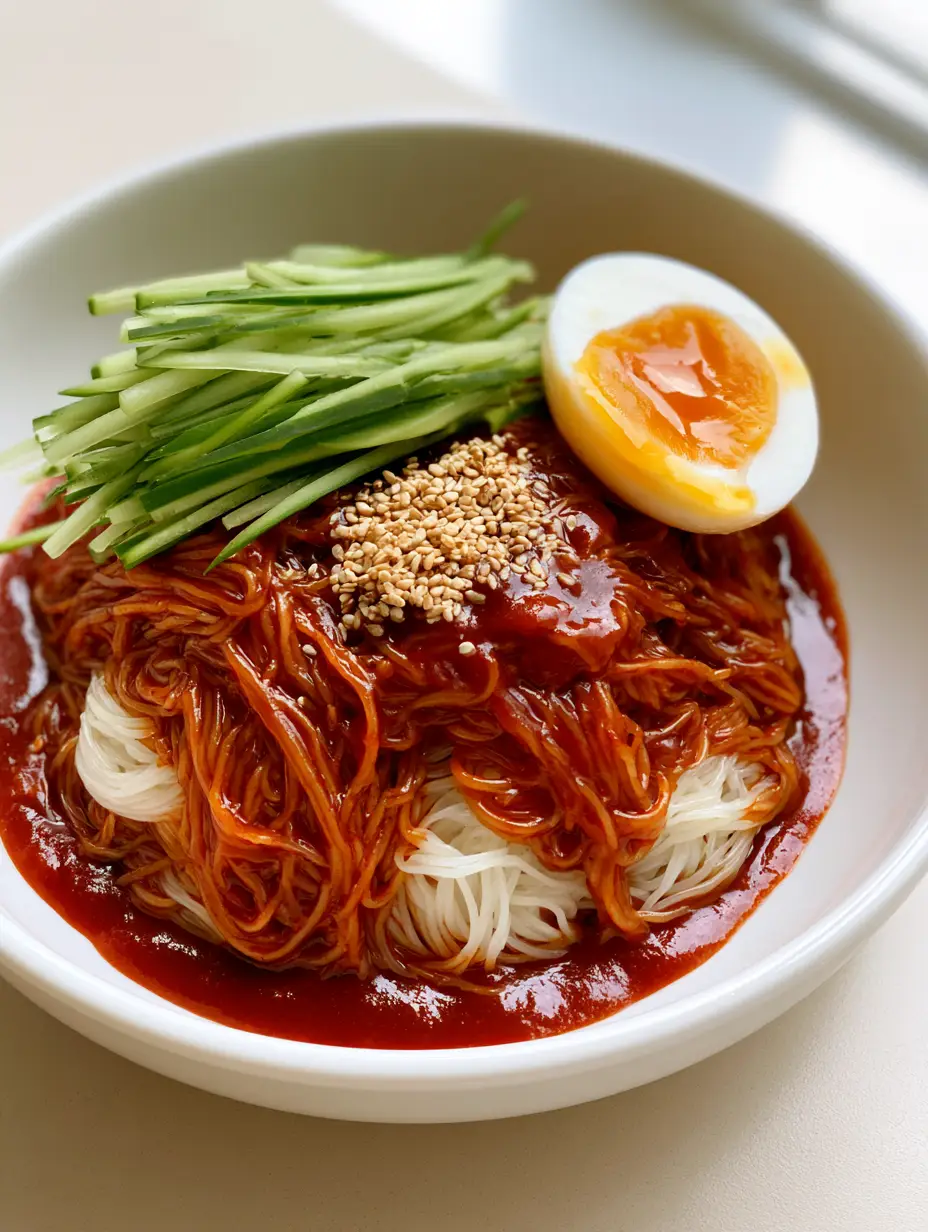
When you take your first bite of Bibim Guksu, the initial hit of fermented chili paste is immediately followed by the cooling crunch of julienned raw cucumber. The experience is elevated by a halved soft-boiled egg with a jammy yolk, which adds a luxurious creaminess to the spicy profile. Topped with a delicate sprinkle of toasted white sesame seeds, this dish is as visually stunning as it is delicious.
Why You Will Crave This Spicy Cold Noodle Bowl
- Textural Harmony: The contrast between the soft, slippery somyeon noodles and the crisp, fresh cucumber creates a satisfying mouthfeel in every bite.
- Flavor Explosion: A complex profile of umami-rich gochujang, bright rice vinegar, and nutty sesame oil creates a vibrant crimson sauce.
- Visual Appeal: The bright green cucumber and the deep orange jammy yolk against the red sauce make it a Pinterest-worthy masterpiece.
- Speed & Simplicity: From boiling the water to your first bite, this meal is ready in the time it takes to cook a single pot of noodles.
The Secret Ingredients for a Glossy Gochujang Coating
Creating the perfect Bibim Guksu starts with high-quality ingredients that balance the “Dan-Ssin-Maet” (sweet, salty, and spicy) profile traditional to Korean cuisine. Each component serves a specific culinary purpose to ensure the sauce clings to every strand of noodle.
Somyeon Wheat Noodles: These are very thin, white noodles made from wheat. Their delicate nature allows them to absorb the sauce quickly without becoming heavy or stodgy. Use 3.5 oz (100g) per serving.
Gochujang (Korean Chili Paste): This is the backbone of the dish. It provides the signature heat and the glossy red coating. Look for a version that is naturally fermented for the best depth of flavor. You will need 2 tbsp (30ml).
Rice Vinegar: This provides the essential “tang” that cuts through the spice and refreshes the palate. 1 tbsp (15ml) is the standard, but feel free to add a splash more if you enjoy high acidity.
Honey or Liquid Corn Syrup: This is the secret to that high-shine finish. While sugar works, a liquid sweetener ensures the sauce remains smooth and vibrantly glossy. Use 1 tbsp (15ml).
Toasted Sesame Oil: Essential for that aromatic, nutty finish that lingers after each bite. Ensure it is “toasted” for maximum impact. 1 tsp (5ml) goes a long way.
Fresh Toppings: You cannot skip the julienned raw cucumber for hydration or the halved soft-boiled egg for protein. If you are looking for more variety, this dish pairs beautifully with a Vietnamese Noodle Salad inspired spread.
Step-by-Step: Mastering the Spicy Bibim Guksu Coating
1. Achieving the Perfect Jammy Egg
To get that halved soft-boiled egg with a jammy yolk seen in our visual blueprint, timing is everything. Bring a small pot of water to a boil, then gently lower in your cold eggs. Boil for exactly 6 minutes and 30 seconds.
Immediately transfer the eggs to an ice bath for 5 minutes. This stops the cooking process instantly, ensuring the yolk stays liquid-gold and rich. Peel carefully and set aside for the final assembly.
2. Boiling and “Shocking” the Somyeon
Somyeon noodles cook incredibly fast, usually in 2 to 3 minutes. Add the noodles to boiling water, stirring to prevent sticking. Once cooked, the most critical step begins: the rinse.
Drain the noodles and scrub them vigorously under cold running water. This removes excess starch, which is the secret to getting that chewy, bouncy texture. If you skip this, your Bibim Guksu will be gummy instead of glossy.
3. Whisking the Vibrant Crimson Sauce
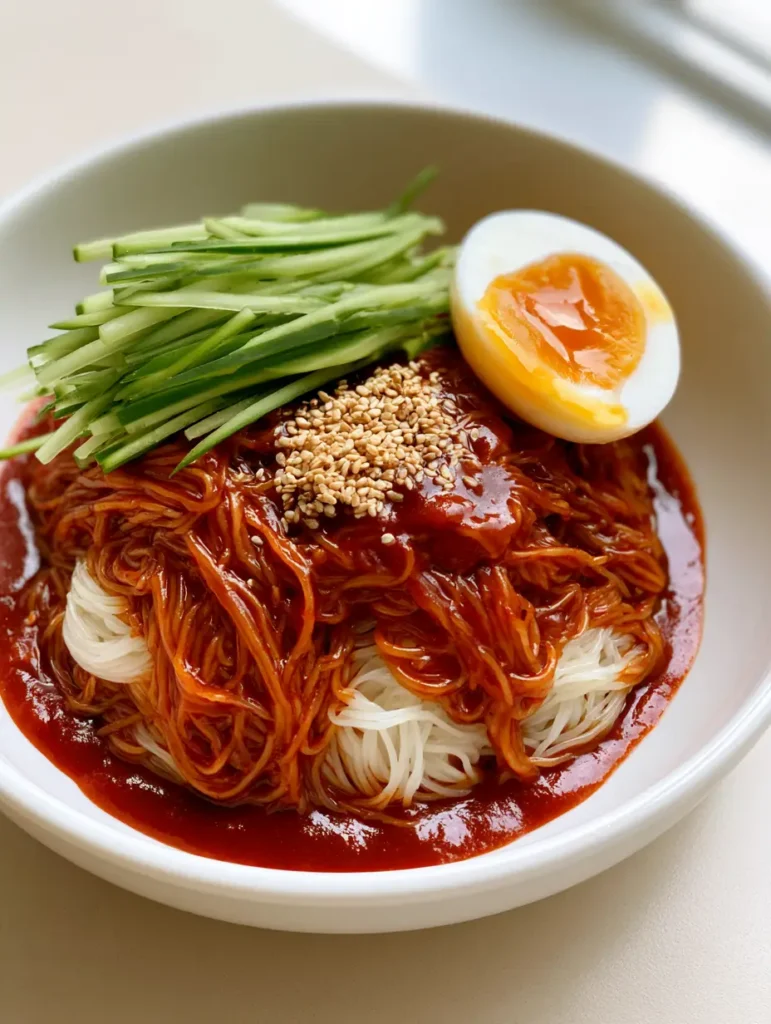
In a large mixing bowl, combine your gochujang, rice vinegar, honey, soy sauce, and minced garlic. Whisk until the sauce is completely smooth and reflects the light. It should look like a glossy red gochujang sauce coating ready to embrace the noodles.
Add the thoroughly drained noodles to the bowl. Use tongs or gloved hands to toss them until every single white strand is transformed into a vibrant red. The sauce should be thick enough to coat, but thin enough to flow.
4. The Art of the Garnish
Place the coated noodles in a clean white ceramic bowl. Arrange a bundle of julienned raw cucumber strips on one side. The green should pop against the red noodles. Place your halved soft-boiled egg next to it, exposing that jammy orange yolk.
Finally, finish with a delicate sprinkle of toasted white sesame seeds over the center. This adds a subtle crunch and completes the professional, high-quality mobile photography aesthetic we are aiming for.
Expert Tips for Bibim Guksu Success
- Drain Thoroughly: Any excess water on the noodles will dilute your sauce and ruin the glossy red coating. Give them a few extra shakes in the colander.
- Adjust the Heat: If you find gochujang too spicy, add an extra teaspoon of honey. If you want more fire, add 1 tsp (5g) of gochugaru (Korean chili flakes).
- Cold is Gold: Serve this dish immediately while the noodles are still chilled from the rinse. You can even chill your serving bowl in the freezer for 5 minutes beforehand.
- Protein Pairings: While the egg is classic, you can serve this alongside a Chimichurri Grilled Chicken Bowl (coming soon) for a fusion protein boost.
Storage, Reheating & Freezing
Bibim Guksu is best enjoyed fresh. Because the noodles are thin, they will eventually absorb the sauce and lose their signature “bounce” if left for too long. However, if you have leftovers, store them in an airtight container for up to 24 hours.
Do not reheat this dish! It is meant to be eaten cold. If the noodles have clumped together, add a tiny splash of cold water and a drop of sesame oil to loosen them back up. This recipe is not suitable for freezing.
What to Serve With Spicy Korean Cold Noodles
This dish is remarkably versatile. For a light summer lunch, it stands perfectly on its own. If you are hosting a dinner party, consider serving it as a refreshing side to a heavier main like an Oven Baked Beef Brisket.
For a lighter, Mediterranean-inspired twist on a multi-course meal, you could even pair it with a Greek Shrimp Mediterranean Bowl. The acidity in both dishes complements each other surprisingly well!
Frequently Asked Questions
Yes! The sauce actually tastes better as the flavors meld. Store it in a jar in the fridge for up to a week and toss with fresh noodles when ready.
Somyeon (thin wheat noodles) is traditional because of its delicate texture, but you can substitute with soba (buckwheat noodles) or even thin spaghetti in a pinch.
The secret is to rinse them vigorously in cold water immediately after boiling to remove the surface starch. Adding a teaspoon of sesame oil after rinsing also helps.
It has a noticeable kick from the gochujang, but it is balanced by sweetness and acidity. You can easily adjust the heat by adding more honey or reducing the amount of chili paste.
Cut the cucumber into 3-inch lengths, slice them into thin planks, and then stack the planks to cut into matchsticks (julienne). This ensures maximum crunch.
The Official Bibim Guksu Recipe
Bibim Guksu: The Ultimate Spicy Korean Cold Noodle Recipe
Ingredients
Equipment
Method
- Boil eggs for 6.5 minutes, then shock in an ice bath. Peel and halve to reveal the jammy yolk.
- Cook somyeon noodles for 2-3 minutes. Rinse vigorously under cold water to remove starch.
- Whisk gochujang, vinegar, honey, soy sauce, and sesame oil until glossy and smooth.
- Toss noodles in the sauce. Top with julienned cucumber, egg halves, and sesame seeds.
Notes
Use a liquid sweetener like honey to ensure a high-gloss finish on the sauce.
Save This Recipe to Pinterest!
If you love the look of these glossy red somyeon noodles and that jammy soft-boiled egg, make sure to save this recipe to your “Easy Dinners” or “Korean Food” board on Pinterest! Follow RecipeHarvest for more vibrant, high-RPM recipes that bring the restaurant experience to your home kitchen.
Did you make this? Share a photo of your Bibim Guksu in the comments below and don’t forget to leave a 5-star rating! Your feedback helps our community grow and helps others find their new favorite summer meal.