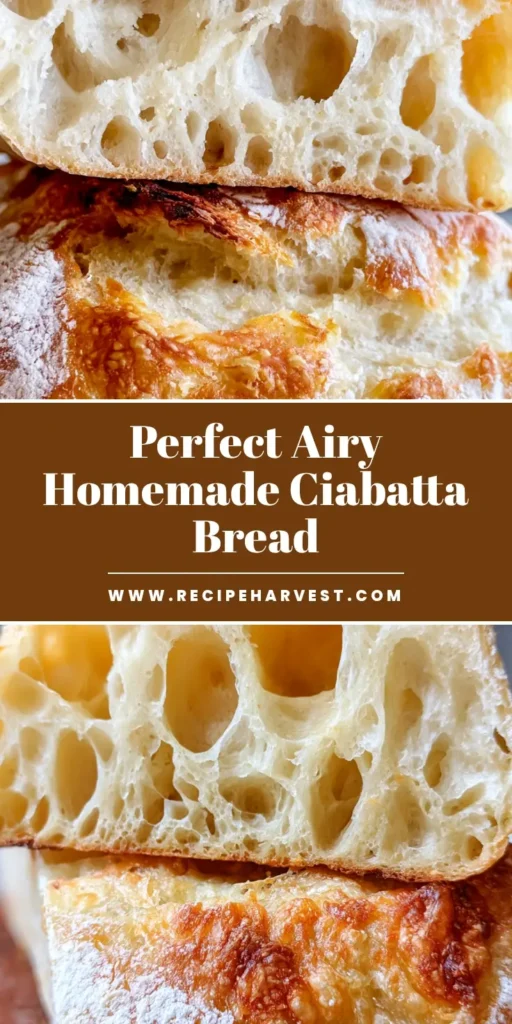
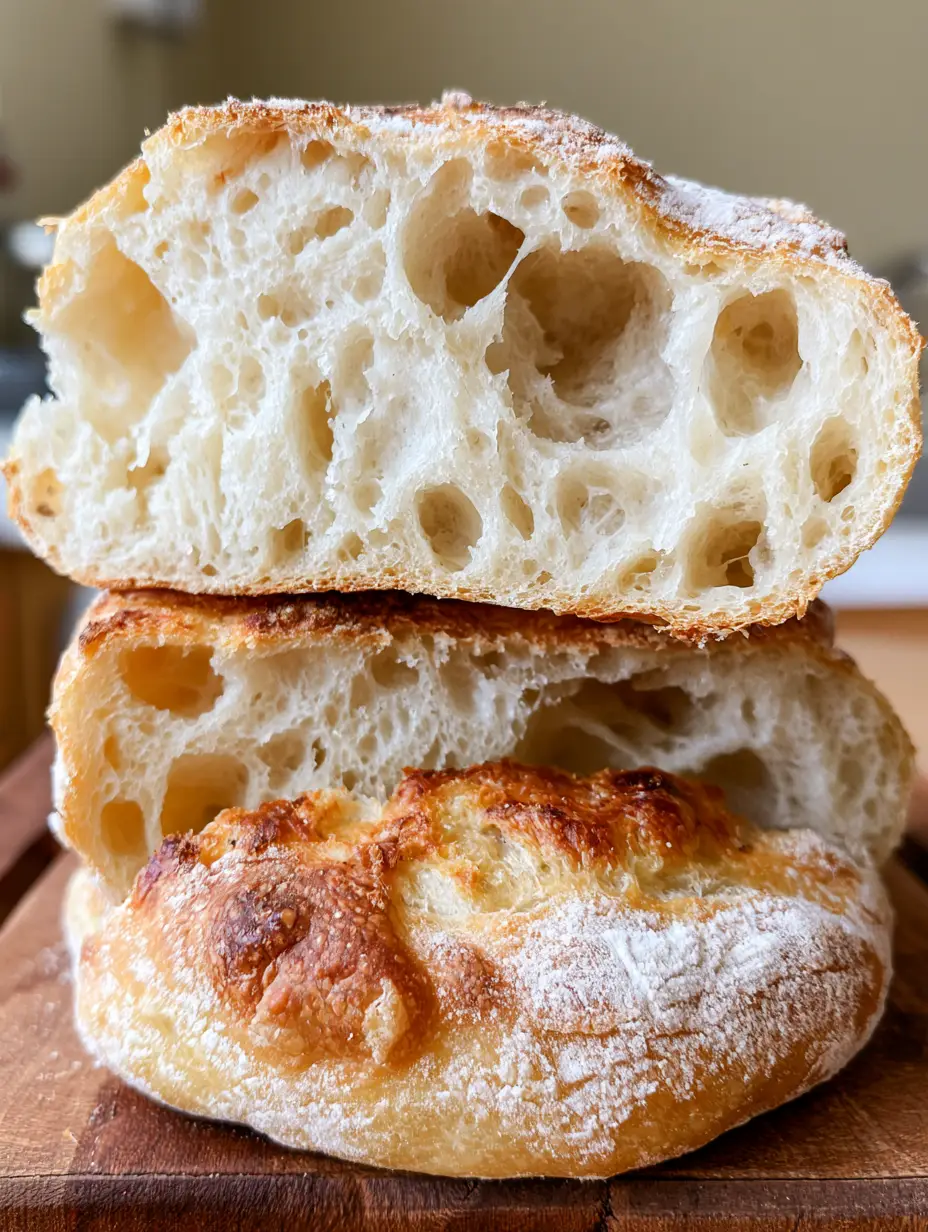
Mastering the perfect Ciabatta Bread Recipe is a rite of passage for every home baker. There is something truly magical about a loaf that boasts a golden-brown crispy crust on the outside while maintaining a cloud-like, pale cream crumb on the inside. Whether you are planning a gourmet sandwich or simply want a side for your garlic butter shrimp, this recipe delivers professional bakery results right in your home kitchen.
This Ciabatta Bread Recipe focuses on high-hydration dough, which is the secret to those iconic large open air pockets you see in high-end artisanal loaves. By following our specific stretch-and-fold technique, you will create a rustic masterpiece that looks like it belongs on a rustic wooden cutting board in a professional food shoot. Get ready to fill your home with the scent of fresh yeast and toasted flour.
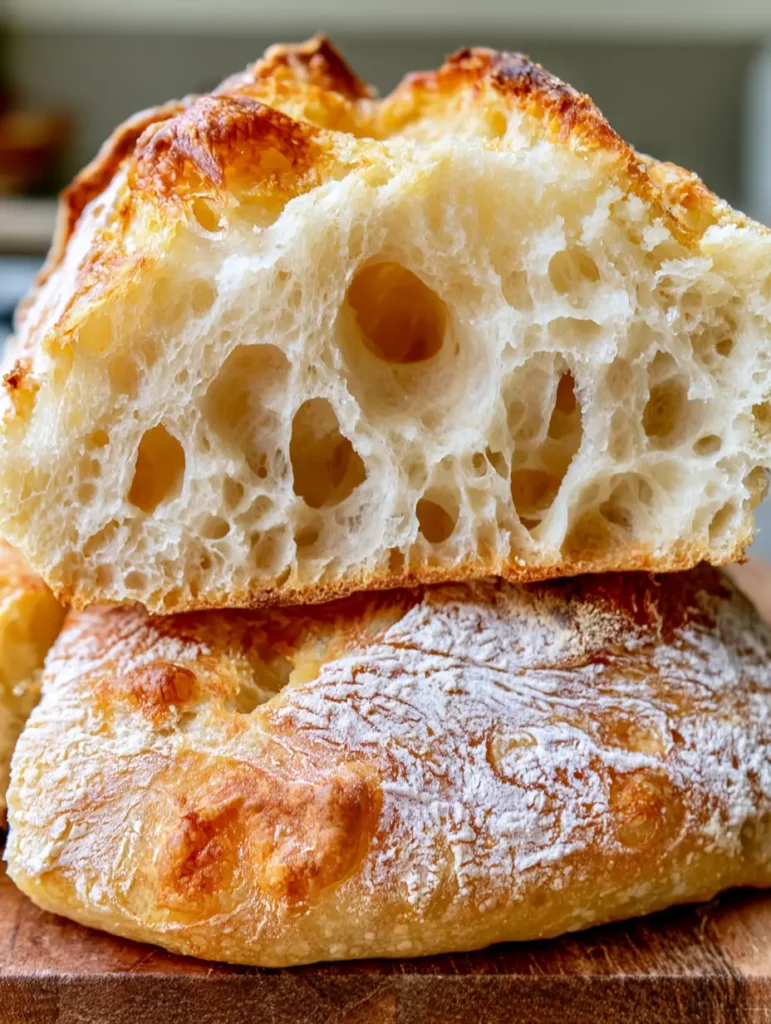
Why This Is the Only Ciabatta Bread Recipe You Need
- Visual Texture: Learn how to achieve a highly aerated interior with irregular, beautiful holes.
- Crispy Perfection: We use steam-injection methods to ensure a thin, crisp, and golden-brown crust.
- Authentic Color: Our fermentation process creates a stunning pale cream-colored crumb that tastes as good as it looks.
- Rustic Aesthetic: Master the light white flour dusting technique for that classic Italian finish.
The Essential Ingredients for Artisanal Success
To achieve the specific textures of this Ciabatta Bread Recipe, the quality of your ingredients matters. Unlike standard white bread, ciabatta requires high-protein flour to support its massive air bubbles.
- Bread Flour: 3 1/2 cups (450g). Bread flour has a higher protein content than all-purpose flour, providing the gluten strength needed to hold large air pockets.
- Warm Water: 1 1/2 cups (350ml). We are aiming for about 78-80% hydration. This high water content is what creates the “slipper” (ciabatta) shape and open crumb.
- Instant Yeast: 1 1/2 tsp (5g). This provides the lift. We prefer instant yeast for its reliability in high-hydration environments.
- Sea Salt: 2 tsp (10g). Salt doesn’t just add flavor; it regulates the yeast activity and strengthens the gluten structure.
- Extra Virgin Olive Oil: 1 tbsp (15ml). Used primarily for handling the dough and adding a hint of Mediterranean richness.
If you enjoy the process of making dough from scratch, you might also want to try our moist pineapple bread for a sweeter alternative after you master this savory classic.
The Secret to Those Iconic Large Air Pockets
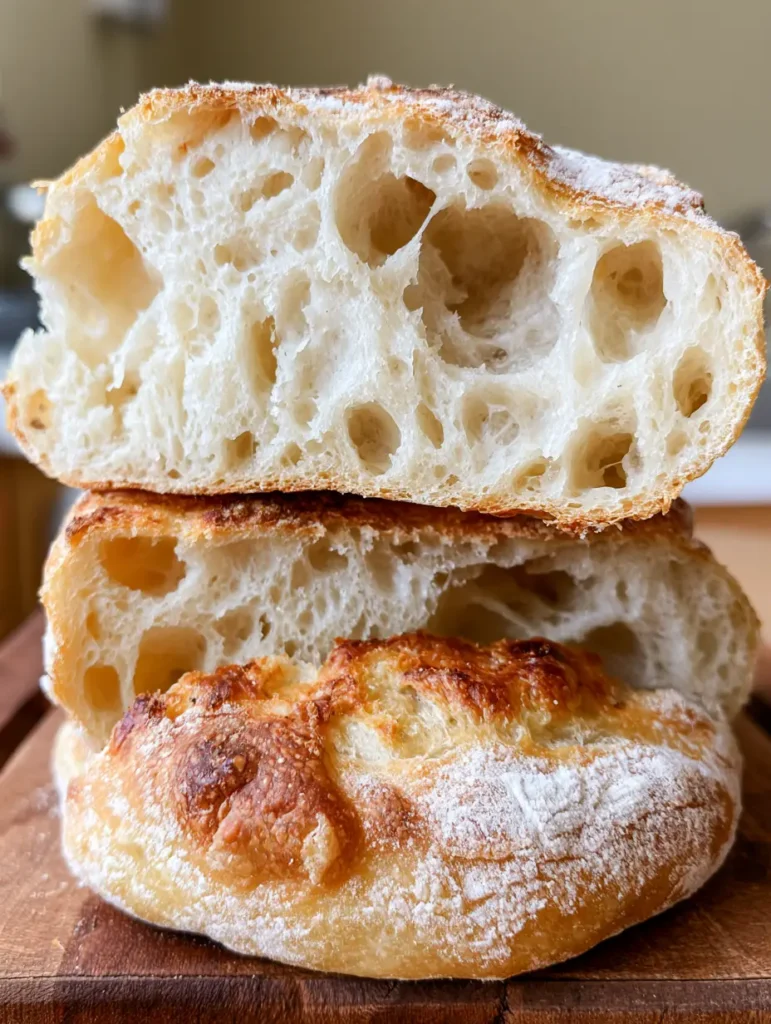
The hallmark of a great Ciabatta Bread Recipe is the “Alveolatura” or the hole structure. You cannot get these holes by kneading the dough traditionally. Traditional kneading creates a tight, uniform crumb (like sandwich bread). Instead, we use a series of stretches and folds.
By folding the dough over itself, we trap air and build strength without degassing the bubbles. This preserves the highly aerated interior that Pinterest fans love. This method also allows the pale cream crumb to remain soft and extensible.
Step 1: The Initial Mix and Autolyse
In a large bowl, whisk together your 3 1/2 cups (450g) bread flour and 1 1/2 tsp (5g) yeast. Slowly add the 1 1/2 cups (350ml) warm water. Mix with a spatula until a shaggy, wet dough forms. There should be no dry flour remaining.
Cover the bowl with a damp cloth and let it rest for 30 minutes. This “autolyse” period allows the flour to fully hydrate, making it much easier to work with later. Even at this early stage, you are setting the foundation for a golden-brown crispy crust.
Step 2: Developing Strength with Stretch and Folds
After the rest, sprinkle the 2 tsp (10g) salt over the dough. Wet your hands to prevent sticking. Reach under one side of the dough, pull it up, and fold it over the center. Rotate the bowl and repeat this 4 times.
You will perform a total of four sets of these folds, spaced 30 minutes apart. By the final set, the dough will transform from a sticky mess into a smooth, elastic sheet that can hold air. This is the key to the thick cross-section slice you see in professional photography.
Step 3: The Bulk Fermentation
Once the folds are complete, cover the dough and let it rise in a warm, draft-free spot for 1.5 to 2 hours. You are looking for the dough to double in size and be covered in visible bubbles. This long fermentation is what develops the complex flavors of an authentic Ciabatta Bread Recipe.
While your bread is rising, consider prepping a side dish like our classic broccoli salad or some fresh cowboy caviar to enjoy with your warm bread later.
Step 4: Shaping and the Light Flour Dusting
Generously flour your work surface. Gently tip the dough out. Do NOT punch it down! You want to preserve every single one of those large open air pockets. Using a bench scraper, divide the dough into two long rectangular loaves.
Dust the tops with a light white flour dusting. Use your fingertips to gently dimple the surface, similar to focaccia but more elongated. Transfer the loaves to a piece of parchment paper, cover, and let rest for a final 45 minutes.
Step 5: Baking for a Crispy, Golden Finish
Preheat your oven to 450°F (230°C) with a baking stone or inverted baking sheet inside. Place a shallow pan on the bottom rack. When you slide your loaves into the oven, pour 1 cup of hot water into the bottom pan to create steam.
Bake for 20-25 minutes. The steam is vital for achieving that thin, crisp, and golden-brown crust. The bread is done when it sounds hollow when tapped on the bottom and the exterior shows visible toasted highlights.
Expert Tips for the Perfect Loaf
- Use a Scale: For the most consistent Ciabatta Bread Recipe, measure your flour and water in grams. Even a small error in hydration can lead to a dense crumb.
- Don’t Over-handle: When shaping, treat the dough like a delicate balloon. If you press too hard, you will collapse the highly aerated interior.
- The Crumb Test: Wait at least 1 hour before slicing. Slicing into hot bread releases steam too quickly, which can turn your pale cream crumb gummy.
- Oven Spring: Ensure your oven is fully preheated for at least 30 minutes before baking to get the maximum “spring” and largest air holes.
How to Store and Reheat Your Ciabatta
Because this Ciabatta Bread Recipe has no preservatives, it is best enjoyed on the day it is baked. To store, wrap the cooled loaf in a clean kitchen towel or a paper bag. Avoid plastic bags, as they will soften the golden-brown crispy crust.
To revive a day-old loaf, mist the crust with a little water and place it in a 350°F (175°C) oven for 5-8 minutes. It will emerge with that signature thin, crisp texture once again. For long-term storage, ciabatta freezes beautifully when sliced and tucked into a freezer-safe bag.
What to Serve with Homemade Ciabatta
This bread is a versatile workhorse in the kitchen. Its rustic brown wooden cutting board appeal makes it perfect for dinner parties. We love using it for:
- Gourmet Sandwiches: Layer it with ingredients from our homemade Big Mac recipe for a high-end twist.
- Dipping: Serve alongside high-quality olive oil and balsamic vinegar.
- Bruschetta: Top toasted slices with tomatoes, garlic, and basil.
- Side Dish: It’s the perfect vessel for soaking up the sauce from a Marry Me Chicken.
Frequently Asked Questions
Yes! You can use an inverted heavy-duty baking sheet preheated in the oven. The goal is to provide immediate bottom heat to create ‘oven spring’ for those large air pockets.
No, this recipe is designed to be made by hand using the stretch-and-fold method, which is actually superior for preserving the delicate air structure of a classic ciabatta.
Steam is essential. By placing a pan of hot water in the bottom of the oven, you keep the dough’s surface moist, allowing it to expand fully before the crust sets into a golden-brown, crispy finish.
Density is usually caused by over-handling the dough during shaping, which deflates the air pockets, or using flour with too little protein. Ensure you use bread flour and a gentle stretch-and-fold technique.
Ciabatta is a high-hydration dough (often 80%+ water). It is supposed to be sticky! Use wet hands or well-floured surfaces and a bench scraper to handle it rather than your bare palms.
The Ultimate Ciabatta Bread Recipe Card
Ciabatta Bread Recipe: The Ultimate Guide to Authentic Airy Loaves
Ingredients
Equipment
Method
- Combine flour, yeast, and water in a bowl. Mix until shaggy. Rest for 30 minutes.
- Add salt. Perform 4 sets of stretches and folds every 30 minutes to build gluten strength.
- Cover and let the dough double in size for 1.5 to 2 hours until very bubbly.
- Divide dough into two rectangles. Dust with flour. Rest for 45 minutes on parchment.
- Bake at 450°F (230°C) with steam for 20-25 minutes until golden-brown and crispy.
Notes
Do not skip the steam pan; it is essential for the thin, crispy crust.
Share Your Baking Journey!
Did you achieve those large open air pockets? We want to see! Please save this recipe to your Bread Board on Pinterest so you never lose it. If you made this Ciabatta Bread Recipe, leave a 5-star rating below and upload a photo of your thick cross-section slice in the comments. Following @RecipeHarvest helps us keep the oven warm for more artisan guides!