Experience the sun-drenched flavors of the Mediterranean with this recipe for a truly Authentic Greek Salad. Known in Greece as Horiatiki, which translates to “village salad,” this dish is a masterclass in simplicity and high-quality ingredients.
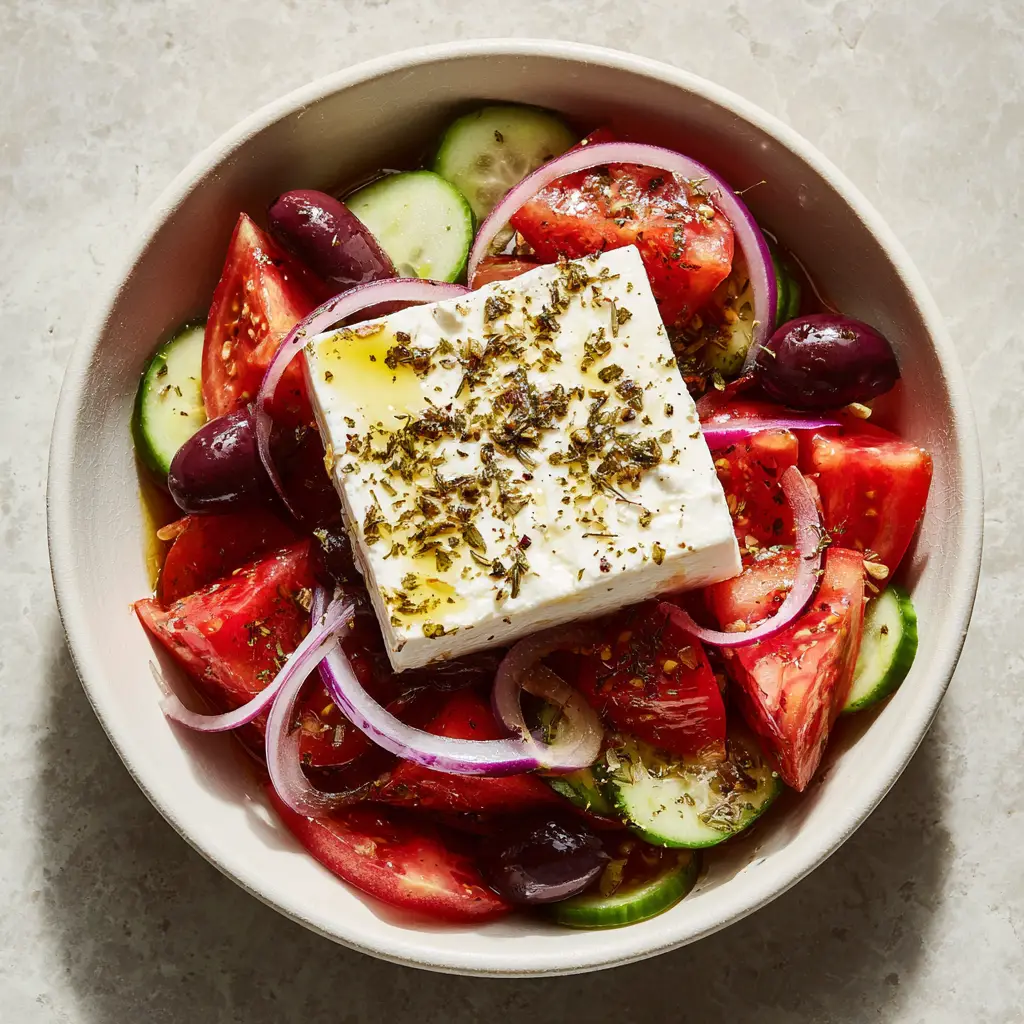
There is a specific visual beauty to a traditional village salad that many Western versions fail to capture. Our Authentic Greek Salad focuses on the rustic, irregular cuts and the iconic block of feta that defines a true taverna experience.
Forget the lettuce and the heavy bottled dressings found in grocery stores. We are stripping it back to the essentials: juicy vine-ripened tomatoes, crisp unpeeled cucumbers, and the liquid gold of extra virgin olive oil. This is the salad that celebrates the peak of summer harvest.
Why This Authentic Greek Salad Will Change Your Summer Dining
- Unapologetic Simplicity: By using large, rustic chunks of vegetables, we preserve the individual textures and flavors of the produce.
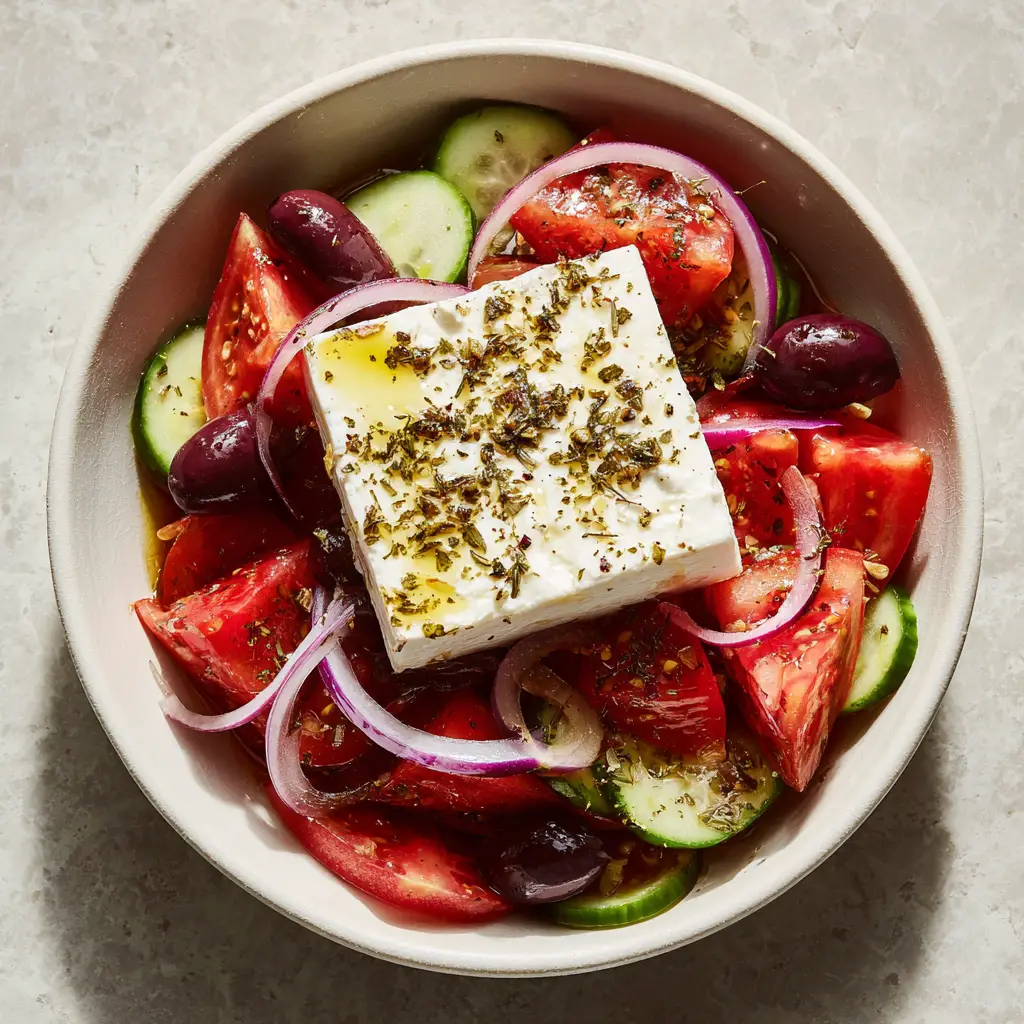
- Visual Forensics: From the translucent red onion rings to the glistening, whole Kalamata olives, every element is placed with intention to match the classic Greek aesthetic.
- Structural Integrity: Instead of crumbled cheese, a thick slab of feta sits proudly on top, allowing guests to break off exactly how much they desire.
- The No-Lettuce Rule: This version honors the tradition that an Authentic Greek Salad never, ever contains leafy greens or fillers.
The Pure Essentials for a Traditional Horiatiki
To achieve the specific look and taste of a Greek village, you must start with the right foundation. Each ingredient here has been selected to match the visual blueprint of a perfect, top-down smartphone-worthy bowl.
Vine-Ripened Red Tomatoes: You will need 4 large (approx. 800g) tomatoes. Look for deep red skins that yield slightly to pressure; these provide the “juicy chunks” required for the base.
Crisp Unpeeled Cucumbers: Use 1 large (300g) English or Persian cucumber. Keeping the peel on is essential for that vibrant green contrast and the structural snap seen in high-end food photography.
Red Onion: Half of a medium red onion (approx. 75g) provides the sharp, pungent bite. We will slice these into paper-thin, translucent rings to create a delicate visual layer on top of the heavier vegetables.
Whole Kalamata Olives: Approximately 1/2 cup (75g) of glossy, dark purple olives. They must remain whole to maintain their oily sheen and provide a burst of salty brine without muddying the colors of the salad.
Greek Feta Cheese: One thick rectangular slab (approx. 7oz or 200g). Do not crumble this; the “Horiatiki” look demands a prominent, single block of white sheep’s milk cheese sitting center stage.
Dried Oregano Flakes: 1 tablespoon (2g) of high-quality dried Greek oregano. These tiny green flakes provide the “heavily sprinkled” finish that ties the earthy aromas to the fresh vegetables.
Extra Virgin Olive Oil (EVOO): 1/4 cup (60ml) of cold-pressed, golden oil. This is more than a dressing; it is the “glistening drizzle” that reflects light and brings the whole dish to life.
Sea Salt: A pinch of flaky sea salt (approx. 1/2 tsp) is the “invisible” ingredient that draws out the tomato juices to create a natural sauce at the bottom of the bowl.
Tools Required for the Perfect Village Chop
Achieving the rustic yet professional look of an Authentic Greek Salad requires minimal but specific tools. A sharp chef’s knife is non-negotiable for achieving those thin onion rings without crushing the cell walls.
You will also need a shallow white ceramic bowl. The shallow depth ensures that the ingredients don’t get buried, allowing the golden olive oil and oregano-flecked feta to remain the focal point of your presentation.
If you are preparing a large batch for a crowd, keep your vegetables separate until just before serving. Much like making homemade pickles, the salt in the salad will begin to draw out moisture immediately, which is great for dipping bread but can make the vegetables lose their crunch over time.
Mastering the Art of the Greek Village Chop
Preparing the Base Layer
Begin by washing all your produce in cold water and patting them completely dry. Cut the large vine-ripened tomatoes into irregular, 1.5-inch chunks; avoid perfectly uniform cubes to maintain that rustic village charm.
For the cucumber, cut it into thick half-moon slices, roughly 1/2 inch thick. Keep the skin on to ensure a vibrant green rim is visible. Place the tomatoes and cucumbers in the shallow white bowl, tossing them lightly with a pinch of sea salt to begin the juice extraction.
Adding Texture and Contrast
Using a very sharp knife or a mandoline, slice the red onion into rings so thin they are translucent. Separate the rings and scatter them loosely over the tomato and cucumber base. This creates a light, airy texture that sits on top of the denser vegetables.
Add the whole Kalamata olives, nestling them into the crevices between the tomatoes. Ensure they are well-drained so their brine doesn’t discolor the bright red tomatoes. The olives should look glossy and dark against the light background of the cucumber.
The Feta and Finishing Touches
Place the thick rectangular slab of feta cheese directly in the center of the bowl. It should sit prominently, acting as the crown of the dish. Do not press it down; let it rest naturally on the bed of onions and olives.
Drizzle the golden extra virgin olive oil generously over the entire salad, making sure to hit the feta block so the oil pools slightly in its natural indentations. Finally, take your dried oregano and rub it between your palms over the bowl to release the oils, creating a heavy sprinkle of green flakes across the white cheese and red tomatoes.
Expert Tips for Success
- Room Temperature is Key: Never serve an Authentic Greek Salad straight from the fridge. Let the tomatoes sit at room temperature for an hour before slicing to maximize their aromatic sweetness.
- The Bread Factor: Always serve this with a side of crusty bread. The mixture of olive oil, tomato juice, and feta salt at the bottom of the bowl is often considered the best part of the meal.
- Onion Mellowing: If you find raw onions too sharp, soak your thin rings in ice water for 10 minutes, then pat dry before adding to the salad. This keeps the crunch but removes the “sting.”
- Quality of Oregano: Try to find “oregano on the branch.” The flavor is significantly more intense than the pre-ground dust found in many spice aisles.
Preserving Your Village Salad
An Authentic Greek Salad is best enjoyed within 30 minutes of assembly. However, if you have leftovers, they can be stored in an airtight container in the refrigerator for up to 24 hours. Note that the cucumbers will lose their “snap” and the tomatoes will release more water.
We do not recommend freezing this salad, as the high water content of the fresh vegetables will result in a mushy texture upon thawing. If you are looking for more long-term summer prep, consider our healthy summer crockpot recipes for meals that store beautifully.
What to Pair with Your Horiatiki
This salad is a powerhouse on its own, but it truly shines when served alongside other Mediterranean-inspired dishes. For a light summer lunch, pair it with a zesty lemon pepper chicken sandwich.
If you are hosting a backyard barbecue, these savory grilled chicken bites make for the perfect protein companion. The acidity of the salad cuts through the smoky char of the meat beautifully. For a vegetarian spread, consider serving it alongside a bowl of creamy sour cream pasta salad for a variety of textures.
Frequently Asked Questions
Yes, green bell peppers are a common addition in many regions of Greece for extra crunch, though the core ‘village’ style often focuses on the tomato-cucumber-onion trio.
No, a traditional Horiatiki or Greek village salad never contains lettuce or any other leafy greens. It is strictly composed of tomatoes, cucumbers, onions, olives, and feta.
For an authentic look and crunch, the cucumbers are typically left unpeeled. This provides a beautiful dark green contrast to the red tomatoes and keeps the slices crisp.
There is no ‘mixed’ dressing. Authenticity comes from a generous drizzle of high-quality extra virgin olive oil, a sprinkle of salt, and a heavy dusting of dried oregano.
In Greece, serving feta as a whole slab is the traditional way to showcase the quality of the cheese. It also prevents the cheese from dissolving into the vegetable juices, maintaining the salad’s texture.
The Ultimate Authentic Greek Salad Recipe Card
Authentic Greek Salad: The Ultimate Traditional Horiatiki Guide
Ingredients
Equipment
Method
- Wash and dry the tomatoes. Cut into large, irregular chunks (about 1.5 inches) and place in a shallow white bowl.
- Slice the unpeeled cucumber into thick half-moons. Add to the bowl with the tomatoes.
- Slice the red onion into very thin, translucent rings. Scatter them over the tomato and cucumber base.
- Toss in the whole Kalamata olives, ensuring they are evenly distributed and glossy.
- Place the thick rectangular slab of feta cheese prominently in the center of the salad.
- Generously drizzle the extra virgin olive oil over the entire dish. Heavily sprinkle the dried oregano flakes over the feta and vegetables.
Notes
Use a high-quality Greek olive oil for the most authentic experience.
Bring the Taste of Greece to Your Kitchen
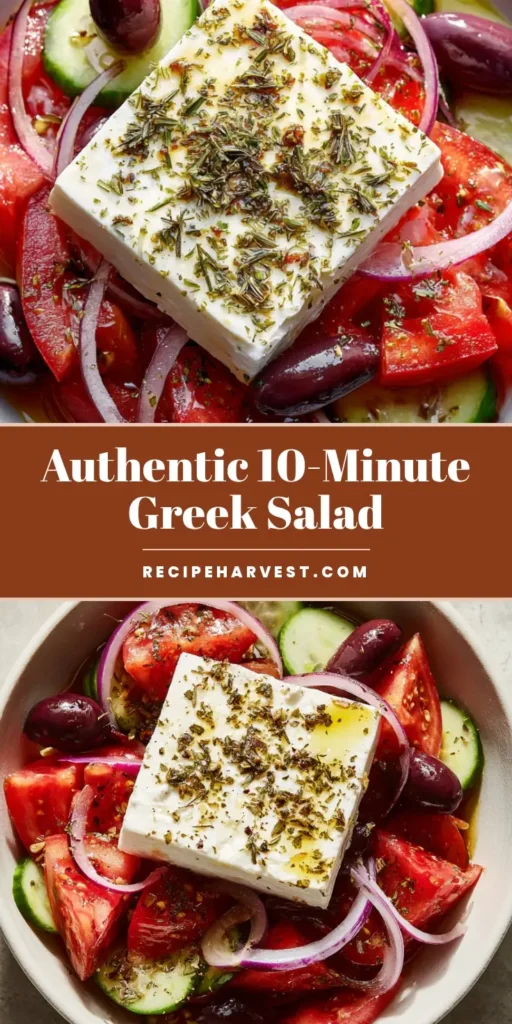
Creating an Authentic Greek Salad is about more than just mixing vegetables; it is about honoring the quality of each ingredient. From the thick slab of feta to the unpeeled cucumber, every detail contributes to a dish that is as visually stunning as it is delicious.
If you enjoyed this trip to the Mediterranean, we would love to hear from you! Please leave a comment below with your favorite way to serve Horiatiki, and don’t forget to share your beautiful salad photos to Pinterest. For more kitchen inspiration, sign up for our newsletter today!