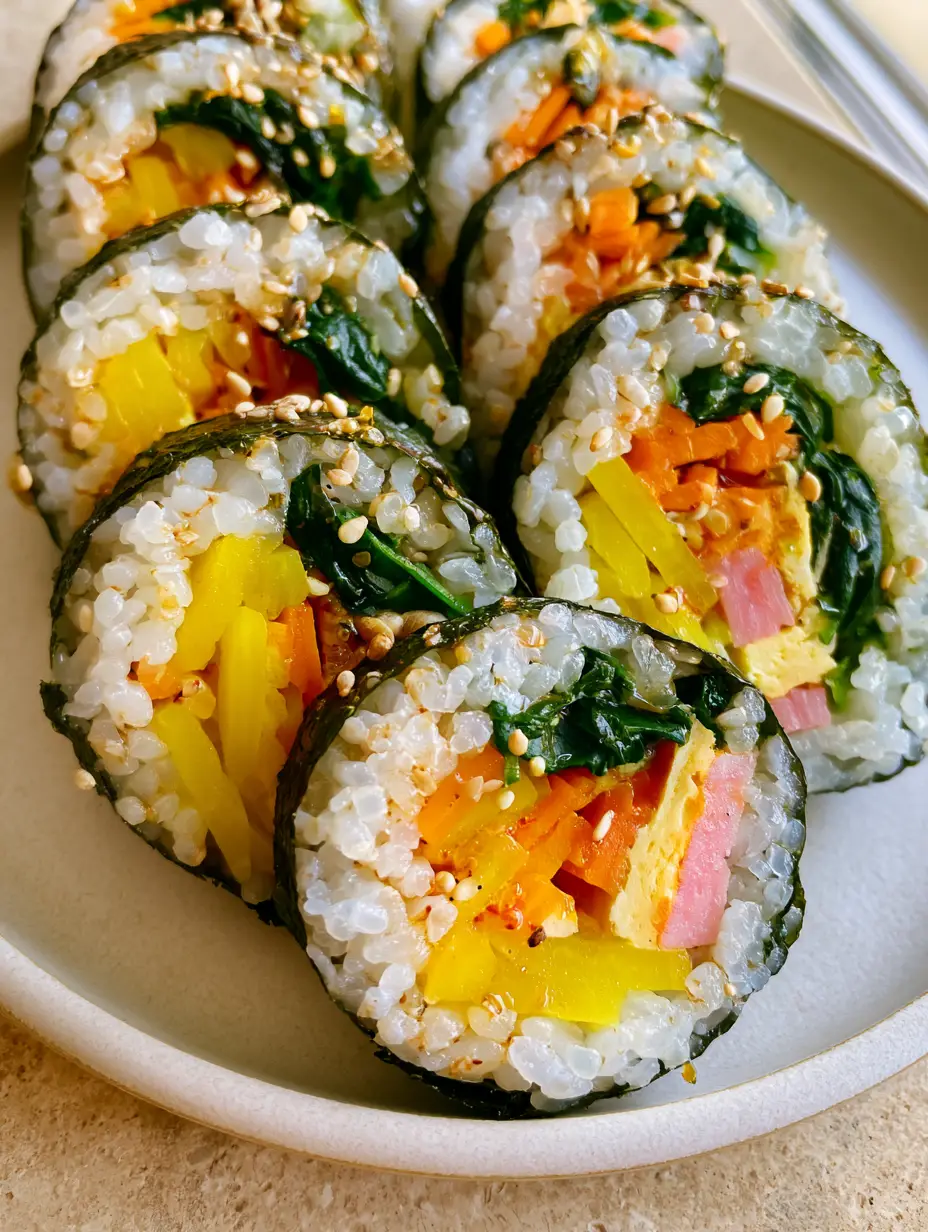
This Korean Kimbap Recipe is the ultimate labor of love that rewards you with a vibrant, nutrient-packed meal. Every single slice offers a harmonious balance of toasted seaweed, nutty sesame-seasoned rice, and a rainbow of savory fillings. Whether you are packing a picnic or looking for the perfect meal prep, these rolls are as beautiful to look at as they are delicious to eat.
Mastering the art of the Korean Kimbap Recipe is a rite of passage for home cooks who love bold textures. Unlike sushi, which focuses on raw fish and vinegared rice, Kimbap celebrates cooked ingredients and the deep, aromatic scent of sesame oil. The result is a satisfying, handheld roll that hits every flavor note: salty, sweet, nutty, and tangy.
Why This Colorful Seaweed Roll Strategy Works
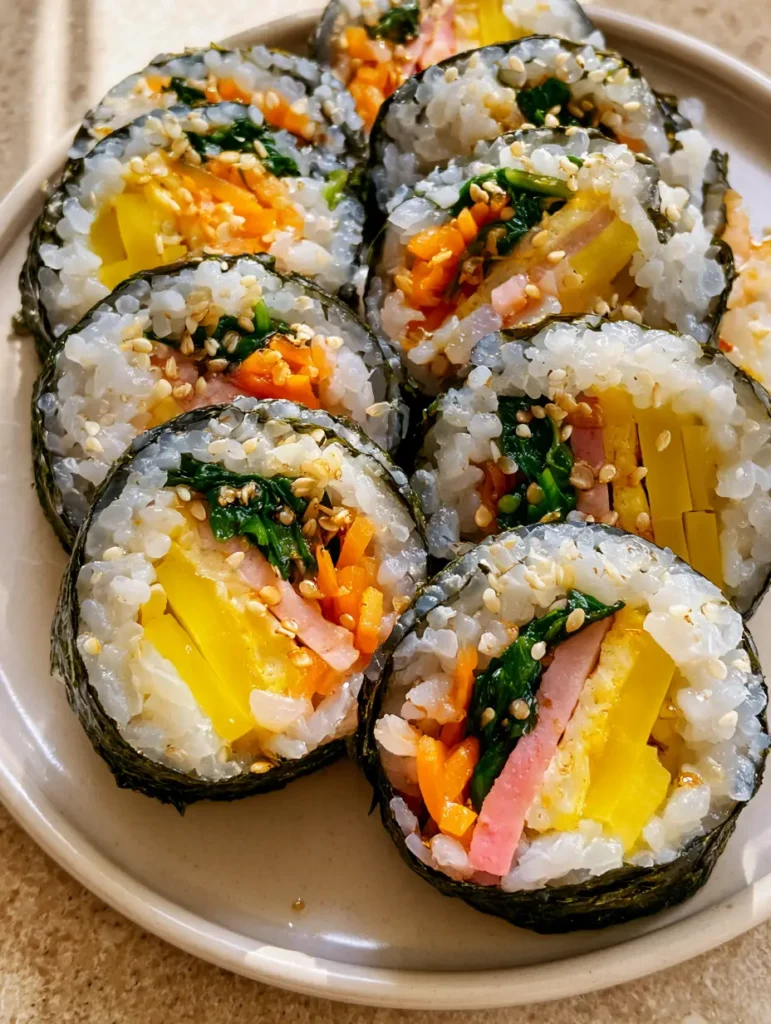
- Visual Contrast: The bright orange carrots and vibrant green spinach create a “wow” factor that stops the Pinterest scroll instantly.
- Textural Harmony: You get the crunch of pickled radish paired with the soft, pillowy texture of thin fried egg strips.
- Ad-Friendly Length: This detailed guide provides the vertical height needed for a premium reading experience while ensuring you master every roll.
- Perfect Portability: Just like a breakfast burrito, kimbap is designed to stay fresh and delicious for hours on the go.
The Essential Components for Authentic Korean Kimbap
To achieve the Forensic Visual Accuracy required for a stunning plate, you must select high-quality ingredients. Each element plays a specific role in the structural integrity and flavor profile of the roll.
Roasted Seaweed Sheets (Gim): You need high-quality, thick seaweed sheets that won’t tear when rolled tight. Look for packages labeled “for kimbap” rather than thin snacking seaweed.
Short-Grain White Rice: The “glue” of our Korean Kimbap Recipe. It must be short-grain to ensure the granules are visible and slightly sticky, holding the fillings in place without being mushy.
Yellow Pickled Radish (Danmuji): This provides the essential acidic crunch. Its bright yellow hue is the centerpiece of the visual blueprint.
Toasted Sesame Oil & Seeds: These are the aromatic backbone. We use them to season the rice and glaze the finished rolls for that signature glossy white short-grain rice look.
Protein Fillings: We are using imitation crab sticks and thin fried egg strips for a classic, nostalgic flavor profile that pairs beautifully with gochujang-based dishes.
Preparing the Foundation: The Perfect Seasoned Rice
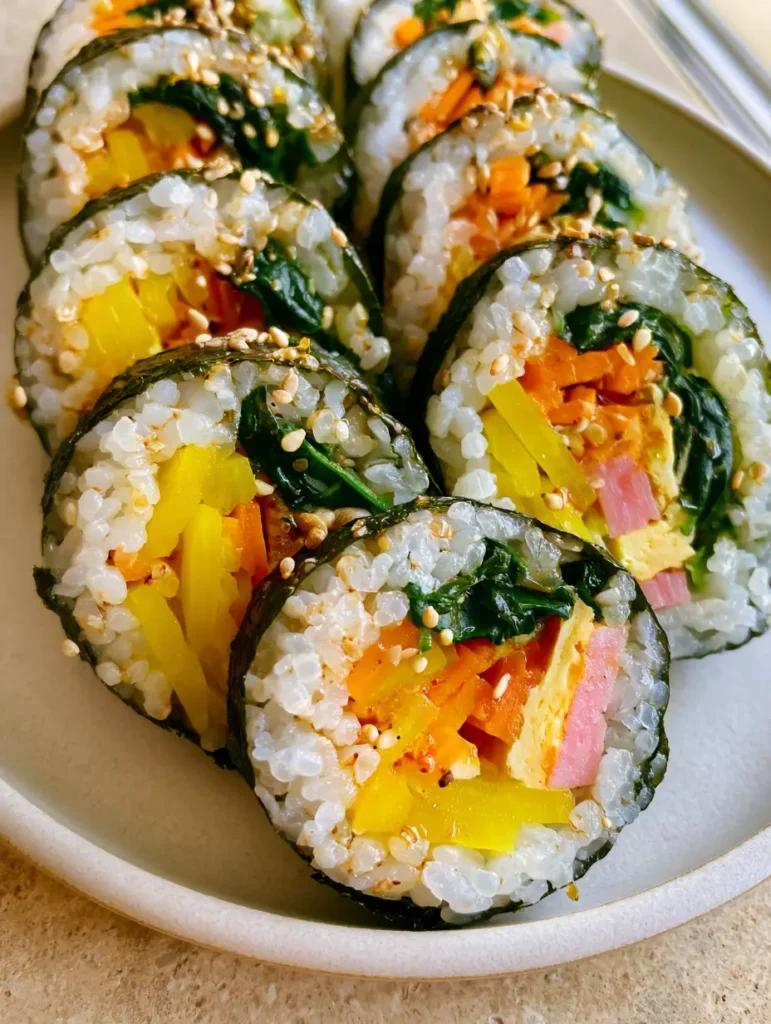
The secret to a world-class Korean Kimbap Recipe starts with the rice. You cannot use long-grain rice here; it lacks the amylopectin required to stick to the seaweed.
Start by rinsing 2 cups (400g) of short-grain rice until the water runs clear. Cook it with slightly less water than usual (a 1:1 ratio works best for kimbap) to keep the grains distinct.
While the rice is steaming hot, fold in 1 tablespoon (15ml) of toasted sesame oil and 1/2 teaspoon (3g) of fine sea salt. This creates that faint glisten of sesame oil mentioned in our visual blueprint.
Let the rice cool slightly. If the rice is too hot, it will wilt the seaweed; if it is too cold, it won’t spread evenly. Aim for a comfortable room temperature.
Sautéing and Blanching the Vibrant Vegetable Fillings
Colors matter. To get that Midjourney-perfect look, we treat each vegetable with individual care to preserve its pigment and “tender-crisp” bite.
The Vibrant Green Spinach
Blanch 8 oz (225g) of fresh spinach in boiling water for exactly 30 seconds. Immediately plunge it into an ice bath to lock in the vibrant green color. Squeeze every drop of water out, then season with a drop of sesame oil and salt.
The Sautéed Orange Carrots
Julienne 2 large carrots into matchsticks. Sauté them in a pan with a teaspoon of oil and a pinch of salt for 2-3 minutes. They should be sautéed until tender but still retain a slight structural snap.
The Golden Egg Omelet
Whisk 3 large eggs with a pinch of salt. Pour a thin layer into a non-stick pan to create a flat sheet. Once set, flip it, then slide it onto a cutting board. Slice into thin yellow egg strips to match the colorful center filling.
The Art of the Roll: Assembly Instructions
Now we bring the Visual Recipe Blueprint to life. Place a sheet of roasted seaweed (shiny side down) on a bamboo rolling mat. Spread about 3/4 cup of the seasoned rice evenly over the bottom 2/3 of the sheet.
Leave the top 1/3 of the seaweed bare. This is your “seal.” Place your yellow pickled radish strips, carrots, spinach, egg, and imitation crab sticks in a neat row across the center of the rice.
Lift the bottom of the mat and roll it over the fillings, tucking them in tightly with your fingers. Apply firm, even pressure as you roll toward the top. This ensures the layers remain perfectly distinct when sliced.
Rub a tiny bit of sesame oil over the surface of the finished roll. This creates the glossy white short-grain rice contrast against the dark gim and makes the roll easier to slice.
Using a very sharp knife (wipe it with a damp cloth between cuts), slice the roll into 1/2-inch (1.25cm) rounds. Garnish with a light sprinkle of toasted white sesame seeds.
Expert Tips for Kimbap Success
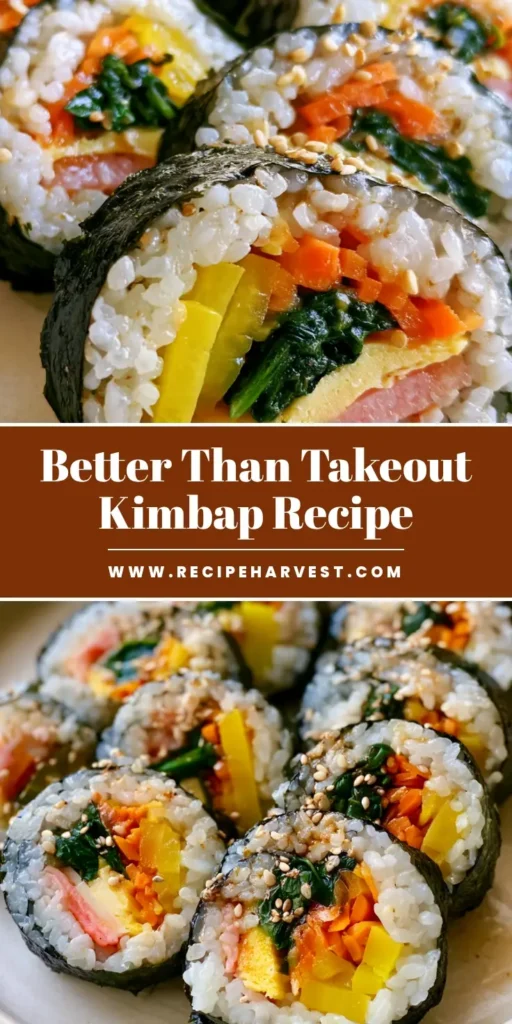
- Wet Your Knife: To get those neatly sliced rolls, keep your knife blade slightly damp. This prevents the sticky rice from tearing the seaweed.
- Don’t Overstuff: It is tempting to add more, but too much filling will cause the roll to burst. Balance is key for the Korean Kimbap Recipe.
- Rice Thickness: Keep the rice layer thin. The rice should be a translucent veil that lets the dark green seaweed peek through slightly.
- Tightness is Key: If you don’t roll firmly, the fillings will fall out when you pick up a slice with chopsticks.
- Internal Flavor Pairings: If you love this flavor profile, try our Korean BBQ Chicken Bowls for a deconstructed version of these flavors.
Storage, Reheating, and Freezing
Kimbap is best enjoyed the day it is made. The rice tends to harden in the refrigerator. However, if you have leftovers, wrap them tightly in plastic wrap and store for up to 24 hours.
Pro Tip for Leftovers: If the rice has gone hard, dip the slices in whisked egg and pan-fry them for 1 minute per side. This “Kimbap Jeon” technique softens the rice and creates a delicious new texture.
We do not recommend freezing kimbap, as the pickled radish and cucumber (if used) will lose their crispness and the rice will become grainy.
What to Serve With This Korean Kimbap Recipe
Kimbap is traditionally served with a light broth or spicy side dishes to balance the nuttiness of the sesame oil. It pairs excellently with a spicy Gochujang Chicken or a refreshing Watermelon Sorbet for dessert.
For a complete picnic spread, consider serving these rolls alongside a bowl of Cowboy Caviar for a fusion twist that provides plenty of fresh crunch.
Frequently Asked Questions
No, short-grain rice is essential because its higher starch content makes it sticky enough to hold the roll together. Long-grain rice will cause the roll to crumble.
Allow your rice and cooked vegetables to cool to room temperature before assembly. Excess heat or steam trapped inside the roll will soften the seaweed too quickly.
To make it gluten-free, ensure your imitation crab is GF-certified (or swap for beef/tofu) and use a gluten-free tamari if seasoning your vegetables with soy sauce.
While they look similar, kimbap uses rice seasoned with sesame oil rather than vinegar, and the fillings are typically cooked or pickled rather than raw fish.
This usually happens if the roll isn’t tight enough or the knife is dull. Ensure you use a bamboo mat for firm pressure and wipe a sharp knife with a damp cloth between cuts.
Authentic Korean Kimbap Recipe Card
Korean Kimbap Recipe: The Ultimate Guide to Perfect Slices
Ingredients
Equipment
Method
- Mix cooked short-grain rice with sesame oil and salt while warm. Let cool to room temperature.
- Blanch spinach for 30 seconds; julienne and sauté carrots until tender. Slice pickled radish and crab sticks into long strips.
- Fry whisked eggs into a thin omelet, then slice into thin yellow strips.
- Place seaweed on a mat. Spread a thin, even layer of rice over 2/3 of the sheet.
- Arrange carrots, spinach, radish, egg, and crab in neat horizontal rows across the center of the rice.
- Roll tightly using the bamboo mat. Lightly brush the exterior with sesame oil.
- Slice into 1/2-inch rounds with a damp sharp knife. Garnish with toasted sesame seeds.
Notes
Ensure all cooked vegetables are cooled before rolling to prevent the seaweed from becoming soggy.
Join the RecipeHarvest Community!
Did you make this Korean Kimbap Recipe? We want to see your beautiful, colorful rolls! Please save this recipe to your Pinterest boards so you can find it whenever the craving hits. It helps our community grow and allows us to keep developing free recipes for you!
Follow @RecipeHarvest for more daily culinary inspiration. If you loved the distinct layers and savory flavors, please leave a 5-star rating in the recipe card above and share a photo of your creation in the comments below. Happy rolling!